
7 Best Procurement Software for Automating Purchasing Processes in 2026
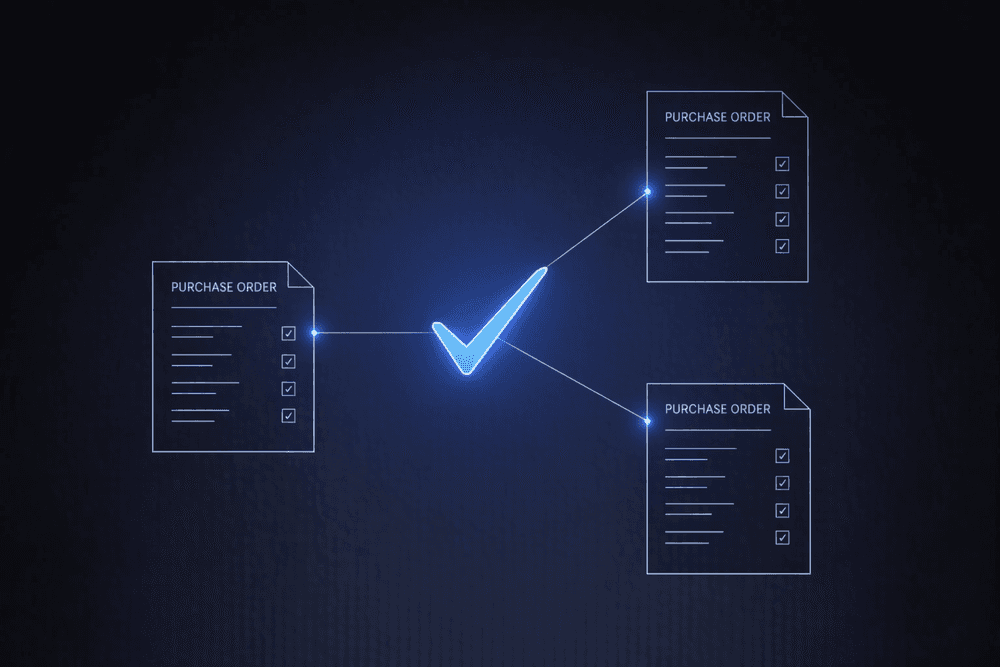
Procurement teams entered 2026 with a familiar problem and new pressure on top of it. A purchase order that should take hours often takes weeks because the work is split across an enterprise resource planning (ERP) system, a contract repository, a supplier portal, and an approver's inbox.
Most Chief Financial Officers (CFOs) and Chief Information Officers (CIOs) now expect AI to make that work faster and auditable enough to withstand a board review. Most procurement tools were built before either expectation existed, and the patches added since rarely close the gap between the demo and the second-quarter operating report.
The global procurement software market reached $9.81 billion in 2025, with AI-in-procurement spending projected to grow at roughly a 28% compound annual growth rate (CAGR).
Many vendors now claim AI features, but "AI-native" is rarely defined precisely, and many tools claiming to have agents stop short of governed workflow execution. This guide evaluates seven options on their ability to automate purchasing workflows across existing systems, in line with the governance and audit requirements boards demand.
How to Evaluate Procurement Software for 2026
Before comparing vendors, it helps to know what separates a procurement tool that holds up in production from one that quietly piles on cost, governance risk, and rollout drag.
Three criteria tend to do most of the work:
- Data governance under AI: Many IT leaders remain uncertain about their ability to manage security and governance when deploying generative AI (GenAI). Any procurement tool you adopt will touch supplier data, pricing, contracts, and financial approvals. Where that data lives and who can access it are threshold questions.
- Deterministic vs. probabilistic decision-making: A three-way match on a purchase order either passes or fails based on rules your team defined, and that decision should produce the same result every time. AI agents add value when interpreting unstructured supplier communications or flagging pricing anomalies, but deterministic logic, where the same input produces the same output every time, is a better fit for financial controls.
- Rollout realism: Rollout timelines vary widely, from a few months for initial deployments to multi-year programs for full-suite adoption. Orchestration layers that sit atop existing systems can shorten that timeline by connecting to existing tools rather than replacing them.
Compare the Best Procurement Software
These seven platforms cover the main approaches available to procurement teams in 2026, ranging from orchestration atop existing systems to full source-to-pay (S2P) suites and enterprise resource planning (ERP)-native modules. We evaluate each on deployment speed, AI governance, data architecture, and reviewer feedback.
1. Elementum
Elementum is an AI workflow orchestration platform. Most of the other tools on this list expect the enterprise to standardize on a single procurement system of record and layer AI inside it.
Elementum enters through the request itself. A purchase requisition, a vendor onboarding form, or an invoice exception arrives through a single governed intake layer that classifies, enriches, and routes each request to whichever ERP, procurement, and finance systems the organization already runs. Governance lives with the workflow, not with the procurement suite, which helps keep AI routing decisions consistent and auditable as purchase order volume climbs.
That intake layer is not procurement-specific. The same single front door handles requests from IT, HR, and Finance, so the purchasing architecture also provides the enterprise with a single request experience for employees and a single governance model for IT to operate under. Teams that start with procurement typically extend the same orchestration to adjacent workflows over time, rather than standing up a new platform for each function.
Under the hood, humans, deterministic business rules, and AI agents each participate as equals in any workflow. A three-way match, supplier risk classification, and approval routing each require a different kind of logic: fixed-rule execution, probabilistic reasoning, and human judgment, in sequence within the same run.
Our patented Zero Persistence architecture reads supplier, spend, and contract data in real time from the customer's data cloud. We never train on it, replicate it, or warehouse it, which keeps audit trails and data residency requirements intact without a separate integration project. Named customers include Sanofi, Snowflake, Under Armour, and Elevance Health.
Key Features
- Our Workflow Engine routes each step to the right participant: AI agents for invoice classification and exception interpretation, rules for three-way matching and policy enforcement, and humans for approvals and judgment calls.
- Pre-integration with OpenAI, Gemini, Anthropic, Amazon Bedrock, and Snowflake Cortex lets teams assign the right model to each procurement step.
- Configurable AI-versus-human decision thresholds with confidence scoring determine when an agent routes autonomously and when it escalates to a buyer or finance approver.
Pros
- Model-agnostic orchestration lets you mix multiple LLMs in a single procurement workflow, reducing AI vendor lock-in.
- SOC 2 Type II, GDPR, and CCPA compliant, with every AI agent action logged and revocable under human-in-the-loop checkpoints.
- We help build the initial workflow, after which customers can independently own and extend new procurement apps.
Cons
- Designed for enterprise-scale deployments, the platform may be overly broad for organizations with simpler or smaller automation needs.
- No native desktop RPA, so workflows that require screen-level automation of legacy desktop applications need a separate tool.
- No public app marketplace or connector library; integration discovery requires direct engagement instead of self-serve browsing.
Pricing
Custom pricing based on organizational scope and deployment requirements.
Who Is Elementum Best For?
Enterprise IT and procurement leaders running governed, auditable purchasing workflows across multi-system environments, including teams that have reached the limits of layering AI onto an existing source-to-pay suite.
2. Coupa
Coupa is a procurement suite that covers supply chain design, source-to-contract, procure-to-pay, accounts payable (AP) automation, and treasury management within a single "Design-to-Pay" scope.
Key Features
- The Navi AI agent portfolio covers bid evaluation, request creation, and analytics, with Agent Studio for building custom agents.
- Process Automator handles workflow automation across procurement and finance steps.
- Three-way matching, automated routing, and invoice creation are built into the core procure-to-pay (P2P) module.
- The Business Trade Network connects buyers and suppliers, and its AI is trained on aggregated spend data from the network.
Pros
- Unified suite that consolidates sourcing, contracts, P2P, AP, and treasury into one system.
- Customer reviews on Gartner Peer Insights cite improved spend visibility and efficiency.
- Built-in three-way matching, automated routing, and invoice creation in the core P2P module.
Cons
- Reviewers cite interface complexity, difficult navigation, and a steep learning curve.
- Suppliers sometimes find the portal hard to navigate, creating friction in adoption on the vendor side.
- Rollouts for large-scale deployments often run 12 to 24 months.
Pricing
No publicly disclosed pricing. Pricing varies based on scope, modules, and implementation complexity.
Who Is Coupa Best For?
Large organizations running fragmented multi-region procurement that want to consolidate sourcing through treasury into a single suite.
3. SAP Ariba
SAP Ariba is part of SAP's spend management portfolio. SAP began rolling out the next version of SAP Ariba on the SAP Business Technology Platform, with phased releases continuing through 2026.
Key Features
- Native integration with SAP ERP and S/4HANA, with real-time sync between procurement and finance modules.
- Demand intake for centralized purchase request management.
- A beta sourcing agent for request for proposal (RFP) creation.
- Supplier lifecycle management connected to SAP master data.
Pros
- Native SAP ERP and S/4HANA integration reduces middleware and syncing overhead for existing SAP customers.
- Customer reviews cite improved transparency, standardization, and audit compliance after consolidating procurement onto the product.
- Connected supplier network for buyer-side procurement.
Cons
- Reviewers flag weak reporting and analytics features.
- Multiple reviewers describe a frustrating user experience and heavy training requirements.
- Licensing terms can be complex, particularly around renewals and price increases.
Pricing
No publicly disclosed pricing. Custom-negotiated based on transaction volume, supplier count, module selection, and integration scope.
Who Is SAP Ariba Best For?
Organizations already running SAP ERP or S/4HANA, where the integration advantage offsets the rollout and licensing complexity. For organizations outside the SAP environment, that integration advantage is smaller.
4. GEP SMART
GEP SMART is a source-to-pay (S2P) suite. GEP also offers procurement outsourcing as a managed service alongside its software.
Key Features
- GEP Quantum Intelligence (GEP Qi) is the AI layer, with agents for data-entry automation, buying recommendations, fraud detection, N-way invoice matching, and approval prediction.
- Source-to-pay coverage spanning sourcing, contracts, procurement, invoicing, and supplier management.
- Spend analysis tools are built into the suite.
- Managed services option that combines the software with operational support.
Pros
- End-to-end S2P coverage in a single suite.
- Managed services option for organizations wanting both software and operational support.
- Reviewers describe the interface as intuitive and customizable.
Cons
- No public pricing, free version, or trial.
- The GEP SMART-to-GEP Qi transition raises contract-related questions; ask the vendor for clarity on how future features and changes will be handled.
- GEP presents some agentic AI features under the GEP Qi brand without clear current-versus-roadmap labels; ask the vendor directly.
Pricing
No publicly disclosed pricing. Subscription-based pricing dependent on deployment scale and modules.
Who Is GEP SMART Best For?
Large global organizations managing both direct and indirect spend that want a single vendor for both software and managed services. Get clarity on the timeline for the GEP SMART-to-GEP Qi transition before signing.
5. Oracle Fusion Cloud Procurement
Oracle Fusion Cloud Procurement is part of the Oracle Fusion Cloud Applications Suite. It offers source-to-settle features with embedded AI across finance and supply chain processes.
Key Features
- Single-platform architecture spanning finance, human resources (HR), supply chain, and procurement within Oracle Fusion.
- Named agentic AI procurement features delivered across quarterly updates, including a Procurement Policy Advisor, Purchase Requisition Status Advisor, and Quote to Purchase Requisition Assistant.
- Integration with other Oracle Fusion applications for organizations standardized on Oracle.
- Configurable workflows for centralized and decentralized purchasing.
Pros
- Native integration with the Oracle Fusion stack reduces middleware cost for existing Oracle customers.
- Documented agentic AI release cadence with named features in production.
- Customer reviews highlight customizable workflows for both centralized and decentralized purchasing.
Cons
- The product has a steep learning curve, with heavy onboarding requirements in time, resources, and expertise.
- Implementation, training, professional services, and total cost of ownership for Oracle Fusion Cloud Procurement deployments run high.
- A documented public-sector ERP modernization project specifies an 18- to 21-month planned timeline from project start to go-live.
Pricing
No publicly disclosed pricing. Agreements are negotiated based on modules, user count, and organizational scale.
Who Is Oracle Fusion Cloud Procurement Best For?
Organizations already standardized on Oracle Fusion ERP, where native integration reduces middleware cost and complexity. Organizations outside the Oracle environment may face a steep onboarding curve.
6. Ivalua
Ivalua is a source-to-pay suite covering both indirect spend and direct materials procurement.
Key Features
- Direct Materials Sourcing capabilities, in addition to indirect spend coverage.
- IVA (Ivalua Virtual Assistant), a GenAI capability for supplier research, market insights, legal assistance, and RFP support.
- Configurable workflows that adapt to business process changes.
- The v10 platform release is described as a step toward agentic AI.
Pros
- End-to-end S2P coverage with dedicated direct materials modules.
- Reviewers cite the platform's flexibility and customization.
- Customer reviews cite customer service and configurability that adapts to business process changes.
Cons
- Some users report implementation challenges.
- Reviewers report a learning curve when configuring the platform for the first time.
- Ivalua presents agentic AI as part of its current product while also discussing roadmap and scaling plans. Ask the vendor which agentic features are live and which are on the roadmap.
Pricing
No publicly disclosed pricing. Custom enterprise quotes; information about free versions or trials is inconsistent across sources.
Who Is Ivalua Best For?
Organizations with direct materials procurement needs alongside indirect spend, particularly in manufacturing, life sciences, and complex supply chain environments.
7. JAGGAER ONE
JAGGAER is an integrated source-to-pay suite where contract data flows across sourcing, eProcurement, invoicing, and supplier management.
Key Features
- Integrated S2P suite covering sourcing, supplier management, contract management, eProcurement, invoicing, and spend analysis.
- AI features focused on contract lifecycle management.
- RFP management workflows for sourcing-heavy environments.
- Configurable supplier risk management.
Pros
- Coverage across sourcing, supplier management, contract management, and spend analysis in one suite.
- AI features in contract lifecycle management.
- Customer reviews discuss JAGGAER's RFP management.
Cons
- Reviewers flag platform rigidity that requires workarounds in some areas.
- G2 review aggregation lists poor support, user-friendliness issues, and inefficient processes as recurring themes.
- A documented full-suite government rollout spanned approximately 18 to 24 months.
Pricing
No publicly disclosed pricing. Agreements require direct negotiation based on organization size and selected modules.
Who Is JAGGAER Best For?
Higher education, life sciences, public sector, and other compliance-heavy industries that need RFP management, contract intelligence, and supplier risk management. Plan for 18 to 24+ months for full-suite, multi-country rollouts.
Choose the Best Enterprise Procurement Software
Choosing the wrong procurement tool leads to compounding costs. Rollouts can take months, and broader cross-functional programs often longer, before you see results. License and add-on costs can rise over time and tie you more closely to a vendor's roadmap. AI features that look good in demos may struggle under real-world volume.
Seventy-one percent of CIOs must prove AI value by mid-2026 or face budget cuts. That timeline leaves little room for a procurement automation project that stalls.
Organizations already running SAP or Oracle benefit from native integration with the procurement module. For a complete source-to-pay suite, Coupa, GEP SMART, Ivalua, and JAGGAER each bring distinct strengths by industry and spend profile.
If your biggest challenge is automating purchasing workflows across existing systems without a multi-year rollout, Elementum takes a different approach. Our deterministic Workflow Engine, Trident, orchestrates AI agents, human decisions, and business rules as equals. In this deterministic orchestration, every step is auditable, and every decision is accountable.
Open Orchestration gives you flexibility on AI models, data clouds, and compute. Orchestrated Intelligence right-sizes each workflow step: AI agents where reasoning adds value, deterministic rules where consistency is required. Your data is always yours. We'll never train on it, replicate it, or warehouse it.
Many customers start with one workflow, see results, then expand into adjacent processes across IT, HR, Finance, and Sales without a cutover event. Production deployment is documented at 30 to 60 days.
Contact us to map workflow orchestration into your architecture and the rest of your AI roadmap.
FAQs About Best Procurement Software
These are the questions IT and operations leaders most often raise when evaluating procurement automation software.
How Long Should You Expect Enterprise Procurement Software to Take to Implement?
Enterprise procurement software implementation timelines vary widely depending on the approach. Full source-to-pay suite deployments such as Coupa, SAP Ariba, Oracle, GEP SMART, Ivalua, and JAGGAER can require long implementation cycles for large-scale rollouts, and multi-country deployments can extend to 18 to 24+ months. Orchestration tools that sit atop existing systems can show value within weeks because they connect to existing infrastructure via APIs and live data connections, rather than requiring data migration or system replacement.
How Do You Tell Whether You Need a Procurement Suite or an Orchestration Layer?
It comes down to whether you need a system of record or a coordination layer. A procurement suite such as Coupa, SAP Ariba, or GEP SMART is a self-contained system of record that covers source-to-pay processes, including sourcing, contracting, purchasing, invoicing, and supplier management. A procurement orchestration layer sits above your existing systems and coordinates workflows across them. Orchestration platforms typically deploy faster and avoid vendor lock-in, but they don't provide the deep, out-of-the-box procurement features that dedicated suites offer.
How Should You Evaluate AI Claims From Procurement Software Vendors?
Start by asking which features are in production today versus on the roadmap. Request a technical architecture review, not just a demo. Ask whether the AI handles deterministic decisions, where the same input should produce the same output every time, or probabilistic ones, where the output can vary. For financial controls like three-way matching and approval routing, deterministic logic is essential for audit compliance. AI agents add value for interpreting unstructured documents and flagging anomalies, but they need human-in-the-loop checkpoints in production.
Keep Reading

How to Use AI in Procurement

How to Automate Procurement Workflows with AI Agents and Business Rules
7 Top Coupa Alternatives in 2026
How Can AI Analyze and Score Supplier Bids?
9 Best AI Orchestration Tools in 2026: Enterprise Evaluation Guide

What is Business Process Automation? Enterprise Use Cases and Best Practices for 2026