
7 Top Coupa Alternatives in 2026
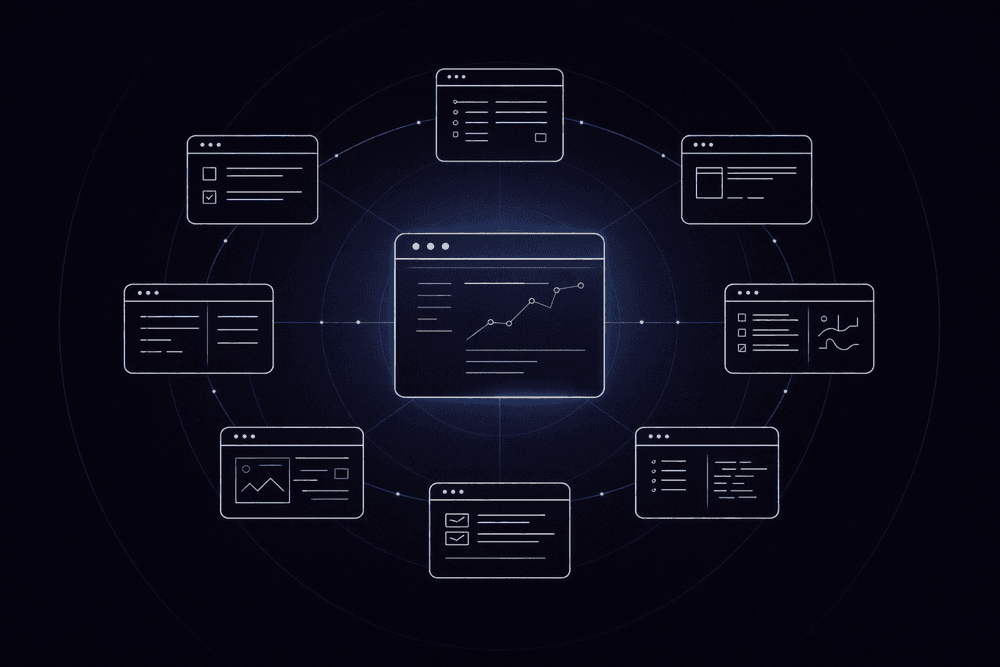
A purchase order passes through SAP, Coupa, three spreadsheets, and an email chain before anyone approves it. An invoice sits in a queue because three-way matching still requires manual cross-referencing across disconnected systems.
Both bottlenecks trace back to the same structural problem: procurement data moves across systems that weren't designed to work together. In 2026, evaluating whether to stay, replace, or rationalize the stack above has become a standard conversation for Chief Information Officers (CIOs).
What to Consider Before Switching from Coupa
Enterprise procurement platforms are evolving beyond static workflows. Many alternatives now include AI agents that can evaluate suppliers, match invoices, and route approvals with varying degrees of autonomy.
That shift changes how systems should be evaluated. Three criteria separate productive transitions from expensive lateral moves:
- Current-state execution vs. roadmap promises: Many vendors market agentic AI capabilities, but the distinction between claimed features and genuinely autonomous behavior remains unclear. Evaluate what a system does in production today. Ask for live demonstrations of claimed capabilities. Without that proof, you risk buying into a roadmap instead of a working deployment.
- Total cost of ownership beyond licensing: In enterprise procurement deployments, implementation, training, and ongoing professional services costs routinely match or exceed annual license fees. Any evaluation that focuses primarily on per-seat pricing is incomplete.
- AI governance readiness: Only 13% of IT leaders strongly agree they have the right governance structures in place [TKTK: need source]. Ensure AI-assisted decisions are auditable, controlled, and aligned with your compliance requirements.
- Contract exit window: Coupa's standard terms require at least 30 days' notice for non-renewal or for any request to change terms. Start the evaluation early enough to clear that window without defaulting into another full cycle.
Why Enterprises Are Actively Seeking Coupa Alternatives
The volume of enterprises evaluating Coupa alternatives has increased materially in 2025–2026. Several structural factors are driving that activity.
Coupa's transition to private ownership following its acquisition by Thoma Bravo has introduced questions about product roadmap continuity and long-term pricing direction that were not present when Coupa operated as a public company. Enterprise procurement teams that negotiated their contracts during Coupa's public-company phase are reassessing the terms of renewal under new ownership.
The AI capability gap is the second driver. Coupa has shipped AI-assisted features, but enterprises comparing those capabilities against the agentic AI built into newer platforms, or against purpose-built AI-native platforms that handle procurement as one dimension of a broader enterprise workflow, are finding meaningful functional gaps.
Data sovereignty is the third factor. Coupa, like most SaaS procurement platforms, processes transactional data on its own infrastructure. Enterprises running Snowflake, Databricks, BigQuery, or Redshift as their data-of-record environment are increasingly unwilling to export procurement data to a separate vendor's cloud. The emergence of platforms that can query procurement data where it already lives, without replicating or warehousing it, has made this demand negotiable for the first time.
Total cost of ownership recalculation is the fourth. Coupa's licensing costs, when combined with the professional services costs required for configuration changes and integrations, frequently exceed the platform's stated contract value. Enterprises that did not build full TCO models at procurement are finding renewal is the right forcing function to do so.
Coupa Alternatives at a Glance
The table below summarizes how the seven alternatives covered in this guide compare across the dimensions that matter most to enterprise procurement buyers in 2026.
| Platform | Deployment Model | AI Approach | Data Sovereignty | Best Fit |
| Elementum | AI-native enterprise application platform | Humans, deterministic rules, and AI agents operating as equals | Zero Persistence: nothing retained at the execution layer | CIOs replacing Coupa incrementally or consolidating cross-functional intake |
| GEP SMART | SaaS (Azure) | GEP Quantum agentic AI | GEP cloud infrastructure | Enterprise S2P with strong strategic sourcing |
| SAP Ariba | SaaS (SAP BTP) | Joule AI assistant | SAP infrastructure | Deep SAP ERP environments |
| Ivalua | SaaS | IVA agentic AI | Ivalua cloud | Independent S2P, direct materials, manufacturing |
| Oracle Fusion Cloud Procurement | SaaS (Oracle Cloud) | AI Agent Studio | Oracle cloud | Deep Oracle Fusion ERP environments |
| JAGGAER ONE | SaaS | JAI human-guided AI | JAGGAER cloud | Direct procurement, complex spend categories |
| Workday Strategic Sourcing | SaaS | Illuminate AI agents | Workday cloud | Existing Workday Finance and HCM customers |
7 Best Alternatives to Coupa for Enterprise Procurement
The products below span the market from full source-to-pay suites to an AI-native enterprise platform that connects your existing ERP and procurement systems. Governance depth, AI capabilities, pricing structure, and deployment model vary significantly across them.
1. Elementum
Elementum is an AI-native enterprise application platform, the AI-native replacement for legacy SaaS, and takes a structurally different path to replacing Coupa than the suite vendors on this list. Rather than landing as a new procurement system on day one, Elementum starts as the Intelligent Front Door for procurement intake, sitting atop the existing stack and routing requests through a governed workflow.
As the platform proves itself on those early request types, more of the procurement workflow moves onto Elementum, procurement data gradually shifts into the customer's own data cloud, and what began as an intake layer becomes the procurement system of record. Coupa exists on the organization's timeline, not on a cutover deadline.
That trajectory has a second advantage. Elementum's Intelligent Front Door is not procurement-specific. The same intake layer routes requests across IT, HR, Finance, and Sales, which means the platform that eventually replaces Coupa also provides the enterprise with a single intake experience for employees and a consistent governance architecture for IT to run. That makes the Coupa replacement project a consolidation play, not just a procurement swap.
Elementum treats humans, deterministic business rules, and AI agents as equals within a governed workflow. Its Zero Persistence architecture retains nothing at the execution layer once a run completes: no working copies, no staged tables, no context carried between runs. Others query your data in place. Elementum also forgets it after every run.
Key Features
- Equals-based routing across humans, deterministic rules, and AI agents within the same workflow, with configurable decision thresholds governing when execution hands off to human review
- Zero Persistence architecture: nothing is retained at the execution layer once a workflow run completes, no working copies, no staged tables, no context carried between runs
- Zero Token Burn optimization that controls AI inference costs within governed workflows, preventing runaway token consumption across high-volume procurement processes
- Zero Vendor Lock-in design: model-agnostic and cloud-agnostic, with pre-integrations across OpenAI, Gemini, Anthropic, Amazon Bedrock, and Snowflake Cortex, so providers can be swapped without rebuilding workflows
- CloudLinks queries data in real time where it already lives (Snowflake, Databricks, BigQuery, Redshift) without copying or warehousing it
- Native integrations and APIs for SAP, Oracle, Salesforce, and other ERP and procurement systems, built with the platform's no-code, drag-and-drop workflow engine
Pros
- Replacement happens without a cutover event. Because Elementum begins as an Intelligent Front Door and absorbs workflows incrementally, teams avoid the big-bang migration risk that comes with swapping out a procurement suite.
- First application in production in about 90 days: scoped procurement intake workflows reach production faster than full-suite implementations because they avoid data migration and ERP reconfiguration.
- Procurement is the starting use case, not the ceiling. The same universal horizontal platform handles IT, HR, Finance, and Sales intake, often turning the Coupa replacement project into a broader consolidation play for the enterprise.
- Data stays with the customer. Zero Persistence means nothing is retained at the execution layer once a run completes, and full audit trails, timestamped citations, and inherited access controls apply to every agent action.
- Global enterprises including Sanofi, Under Armour, and Elevance Health run on Elementum.
Cons
- Scope fit for enterprise scale: organizations with simpler or smaller needs may find the platform broader than required
- No native desktop RPA capability: workflows requiring screen-level automation of legacy desktop applications need a separate tool
- No public connector marketplace: integration discovery requires direct engagement rather than self-serve browsing
Pricing
Custom enterprise quotes based on organizational scope, number of workflows, and deployment requirements.
Who Is Elementum Best For?
Two kinds of buyers tend to fit. The first is the CIO who has already decided that Coupa has to go but cannot stomach the risk profile of a full-suite replacement; the staged migration lets them get off Coupa without betting the procurement function on a single cutover date.
The second is the organization that wants more than a procurement tool from the project: enterprises looking to rationalize intake across IT, HR, Finance, and Sales on a single, governed platform, and organizations looking to replace legacy SaaS with workflows built natively on their own data infrastructure, especially if they already run Snowflake, Databricks, BigQuery, or Redshift and want procurement data to stay there.
2. GEP SMART
GEP SMART is a source-to-pay (S2P) suite covering procurement workflows across sourcing, contracting, and spend management. Built on Microsoft Azure, it offers a unified S2P suite with ERP-agnostic integration. GEP Quantum applies agentic AI across spend analysis, sourcing, and contract management.
Key Features
- GEP Quantum for agentic AI spend analysis that works toward business goals autonomously
- Unified data model underpinning all modules, reducing cross-system reconciliation
- In-built adapters and APIs connecting to SAP and Oracle without middleware
- Collaborative workspace spanning category management, sourcing, and supplier engagement
Pros
- Top source-to-pay rankings across strategic procurement categories in independent analysis
- Unified suite with one database and a collaborative workspace, reducing multi-module fragmentation
Cons
- Usability scores of 6.9/10 on TrustRadius, lower than comparable products on the same review site
- Customer reviews note weaknesses in notifications for new purchase orders and invoice status updates
- Cloud-hosted on Microsoft Azure means workflow data transits GEP's infrastructure during execution; teams with strict data residency requirements will need to validate this before procurement
Pricing
SaaS subscription pricing with custom quotes based on modules and organization size. A managed-services delivery option is available.
Who Is GEP SMART Best For?
GEP SMART is well-suited to enterprises that need strength in strategic procurement categories such as sourcing, spend analytics, contract management, and supplier management. Factor the usability gap flagged in customer reviews into your evaluation.
3. SAP Ariba
SAP Ariba is an S2P suite often evaluated by organizations running SAP S/4HANA. SAP is rolling out next-generation Ariba capabilities on SAP Business Technology Platform through 2026.
Key Features
- Joule, SAP's AI assistant, for conversational procurement task completion
- Real-time sync with SAP S/4HANA to reduce manual data-entry delays
- Ariba Network for catalog-based purchasing and supplier collaboration
- Pre-built compliance and approval workflows spanning sourcing to payment
Pros
- Native SAP S/4HANA integration is the strongest argument for organizations already running SAP ERP
- Full end-to-end procurement suite covering sourcing to payment
- Multiple reviewers cite customer support teams providing clear, step-by-step guidance
Cons
- Reviewers cite high complexity, a steep learning curve, and high implementation cost
- Joule AI capabilities are built on SAP's proprietary large-language-model stack; organizations that need model-agnostic governance or the flexibility to swap AI providers should verify this before procurement
- Supplier transaction fees built into SAP Ariba's network model are reported by reviewers as creating indirect costs for buyers; SAP does not publicly disclose a standard fee structure
Pricing
Hybrid pricing model: subscription-based per module, spend-under-management fees for transactional procurement, and user licensing for advanced modules.
Who Is SAP Ariba Best For?
SAP Ariba is often a strong choice for organizations with deep SAP investments where native ERP integration outweighs other considerations. In non-SAP environments, complexity, cost structure, and supplier network fees require closer evaluation.
4. Ivalua
Ivalua is an independent S2P suite serving enterprise customers across multiple industries and regions. Its V10 release builds on IVA, an AI agent-first architecture, while expanding low-code and no-code capabilities.
Key Features
- IVA for request evaluation, contract drafting support, and supplier and contract risk insights
- Agentic AI for supplier identification, master-data validation, and certification verification
- Pre-built connectors and open APIs for SAP, Oracle, and Microsoft integration
- Low-code and no-code workflow configuration via V10's updated architecture
Pros
- User-interface customization is frequently mentioned in customer reviews
- Product-Direction score of 9.1 for Ivalua vs. 8.6 for Coupa on G2, suggesting stronger user confidence in Ivalua's roadmap
- Full S2P coverage, including direct-materials management, with ERP-agnostic integration
Cons
- Training requirements for new users are consistently cited as the primary adoption barrier
- Reviewers mention occasional slowness and hard-to-trace errors
- Three-year TCO reaches enterprise scale with professional services as a major ongoing cost; validate total costs independently
- Procurement data is processed within Ivalua's cloud environment; organizations with strict data-sovereignty requirements should validate policies before procurement
Pricing
Annual subscription pricing with custom quotes.
Who Is Ivalua Best For?
Ivalua is well-suited to enterprises that need a full, independent S2P suite without tying their procurement stack to a specific ERP vendor. Its strength in customization and direct-materials management makes it relevant for manufacturing and complex supply-chain environments.
5. Oracle Fusion Cloud Procurement
Oracle Fusion Cloud Procurement is a cloud-native procurement module within Oracle Cloud ERP, spanning procure-to-pay, strategic sourcing, and supplier management.
Key Features
- Oracle AI Agent Studio for custom agent development alongside pre-built agents for quote-to-requisition conversion
- Autonomous sourcing agents for simple, repetitive tail-spend tasks
- Native Oracle Fusion ERP integration across Finance, HR, and Supply Chain
- Multi-entity and multi-site operations support for global deployments
Pros
- Deep native integration with Oracle Fusion ERP eliminates cross-system data reconciliation for Oracle shops
- Reviewers cite cloud data housing, global chart-of-accounts, and customized general-ledger mapping
Cons
- Reviewers note complex interfaces, difficult report-running, and a need for more instructional documentation
- Migrating customizations from Oracle E-Business Suite to the cloud is challenging
- Procurement-specific reviews are sparse; most validation comes from the broader Oracle ERP review base
Pricing
Per-user SaaS pricing with role-based licensing. Non-Oracle environments may need to account for additional Oracle application licensing.
Who Is Oracle Fusion Cloud Procurement Best For?
Often a strong fit for organizations already running Oracle Fusion ERP. For non-Oracle environments, bringing Oracle ERP into scope can expand the project well beyond procurement.
6. JAGGAER ONE
JAGGAER ONE is used in direct procurement and complex spend categories. The suite introduced JAI in 2025, a human-guided AI orchestrator designed to evolve toward autopilot capabilities over a two-year roadmap.
Key Features
- JAI for AI-orchestrated spend analysis, Supplier 360 summaries, and conversational task completion via JAGGAER Assist Premium
- Category-specific workflows spanning direct materials, MRO, and services procurement
- Highly configurable process workflows for organization-specific procurement needs
- Sourcing execution and supplier-engagement tooling across complex spend categories
Pros
- TrustRadius scores: 9.0 likelihood to recommend, 9.0 implementation rating, 8.9 performance score
- Reviewers highlight configurable workflows and responsive customer support
Cons
- Some reviewers describe the platform as difficult to use
- Reports of rigidity in certain areas, requiring workarounds
- JAI's autonomous capabilities are still on a development roadmap; current deployments rely on human-guided AI
Pricing
Annual subscription pricing with customized enterprise structure.
Who Is JAGGAER ONE Best For?
Enterprises with complex, category-specific procurement needs, particularly direct materials, manufacturing, and higher education, should evaluate JAGGAER. Weigh usability concerns against functional depth.
7. Workday Strategic Sourcing
Workday Strategic Sourcing sits within Workday's spend-management portfolio alongside Finance and HR.
Key Features
- Supplier Contract Agent for supplier setup and risk reduction
- RFx, reverse auctions, and AI-powered CLM for sourcing execution
- Supplier onboarding with reporting and savings tracking
- Workday Illuminate AI agents embedded across HR and Finance workflows
Pros
- Reviewers highlight intuitive navigation and easy-to-understand nomenclature
- Integrates with Workday Finance and HCM, supporting collaboration and supplier-management workflows
- For existing Workday customers, procurement becomes an incremental module cost within an already unified suite
Cons
- "Great integration but with limited flexibility" is a recurring review theme
- Not a full standalone procure-to-pay system; focuses on sourcing execution
- AI capabilities are native to Workday's Finance and HR architecture; cross-suite workflows may need additional middleware
Pricing
Subscription-based pricing. Public materials do not specify per-user rates or explicit bundling details for Workday Strategic Sourcing.
Who Is Workday Strategic Sourcing Best For?
Best for organizations already invested in Workday Finance and HCM that need sourcing-focused functionality and are comfortable integrating other P2P components separately.
How to Evaluate Coupa Alternatives: A Framework for Enterprise Procurement Teams
Choosing among Coupa alternatives requires a structured evaluation process that accounts for the full complexity of enterprise procurement environments. The following framework reflects the criteria that enterprise procurement and IT teams consistently apply during active vendor selections in 2026.
Step 1: Define Your Migration Risk Tolerance
The most fundamental architecture decision when evaluating Coupa alternatives is not which vendor has the best feature set, it is how much migration risk your organization can absorb. Full-suite replacements require data migration, ERP reconfiguration, and user retraining simultaneously. Incremental platforms that begin as an intake layer and absorb workflows progressively carry a lower risk profile.
For organizations with compliance-sensitive procurement, those under SOX, FedRAMP, or sector-specific regulatory regimes, the audit trail continuity across the migration period is as important as the capabilities of the destination platform.
Step 2: Map Your Existing Stack Before Adding a New Layer
Coupa typically sits alongside at least one ERP (SAP or Oracle being most common), a contract repository, a supplier information management system, and often a separate spend analytics tool. Before selecting a Coupa alternative, map where each of these systems sits, what data each owns, and which integrations are currently in production.
Platforms that require you to abandon that existing stack, moving ERP data into the new procurement platform's cloud, carry hidden costs in data migration, integration rebuilding, and ongoing reconciliation. Platforms that can query existing systems in real time, without replicating the data, preserve the value of that existing investment.
Step 3: Evaluate Data Sovereignty Posture
All seven alternatives in this guide process procurement data differently. Five of them, GEP SMART, SAP Ariba, Ivalua, Oracle Fusion Cloud Procurement, and JAGGAER ONE, operate on a model where procurement transactional data is processed on the vendor's cloud infrastructure. Workday operates similarly within its own environment.
Elementum's Zero Persistence architecture is the exception: nothing is retained at the execution layer once a run completes, no working copies, no staged tables, no context carried between runs. Each request is logged with a timestamped citation and runs under the customer's own inherited access controls, so the audit trail shows exactly what ran and why, without a persistent copy of the underlying data.
For enterprises running Snowflake, Databricks, BigQuery, or Redshift as their data-of-record environment, this distinction is significant. CloudLinks queries procurement data where it lives, in real time, without moving it.
Step 4: Pressure-Test AI Claims Against Production Evidence
Every platform on this list markets AI-powered procurement capabilities. The claims differ substantially in what they actually deliver in production deployments versus what remains on a development roadmap.
When evaluating AI capabilities in Coupa alternatives, ask vendors to demonstrate three specific things in a live environment: configurable decision thresholds that govern when AI acts autonomously versus when it escalates to human review; full audit trails on every AI-assisted decision with timestamps and rationale; and documented compliance controls relevant to your regulatory environment.
Step 5: Calculate Full TCO Including the Exit Cost
Any TCO model for Coupa alternatives that begins with license fees and ends with implementation cost is incomplete. A full model includes: implementation and integration costs; data migration costs (which scale with data volume and source-system complexity); user retraining and change management; ongoing professional services for configuration changes; productivity loss during cutover; and the cost of maintaining parallel systems during any transition period.
For organizations on Coupa's standard contract terms, the exit mechanics, 30 days' notice minimum, also affect the TCO calculation. Delaying the evaluation to within that window typically means absorbing another full renewal cycle before the transition can begin.
Choose the Right Coupa Alternative for Your Stack
The right Coupa alternative starts with a practical architecture decision. Some teams need a new suite. Others need their existing systems, approvals, and data sources to work together through a single, governed platform.
A full-suite replacement can address the breadth of the source-to-pay process. An AI-native enterprise platform that begins as an Intelligent Front Door addresses cross-system handoffs while preserving existing investments and enabling incremental replacement without a cutover risk. That distinction becomes more urgent for CIOs facing a 71%, according to Gartner, deadline to prove AI's value by mid-2026.
Elementum is the AI-native enterprise application platform, the AI-native replacement for legacy SaaS, purpose-built for this architecture question. Zero Persistence means nothing is retained at the execution layer once a run completes, so there is no vendor-held copy of procurement data to secure or reconcile.
Configurable decision thresholds determine when AI acts autonomously and when decisions route to a human reviewer, with full audit trails, timestamped citations, and compliance controls tested and reviewed before production rollout in regulated environments. Zero Vendor Lock-in means AI providers can be swapped without rebuilding workflows. Zero Token Burn controls inference costs across high-volume procurement processes.
First application in production in about 90 days: faster than full-suite replacements because the approach avoids data migration and ERP reconfiguration. For organizations that have already invested in their procurement and ERP stack, the faster path to AI-driven process improvement is often to close handoff gaps and establish governed AI execution rather than replace the systems wholesale.
Contact us to map the replacement path into your architecture and the rest of your AI roadmap.
FAQs About Coupa Alternatives
What are the most common reasons enterprises switch from Coupa?
The four most frequent drivers are: concerns about pricing and TCO following Coupa's transition to private equity ownership; AI capability gaps relative to newer platforms; data sovereignty requirements that conflict with Coupa's cloud-hosted architecture; and the accumulated cost of professional services required to maintain Coupa configurations over time.
Organizations evaluating Coupa alternatives in 2026 are most often doing so because at least two of these factors have become simultaneously urgent at contract renewal.
Can I replace Coupa incrementally without a full cutover?
Yes. Platforms that begin as an intake layer, routing procurement requests through governed workflows without requiring a full data migration on day one, enable incremental replacement. Elementum, for example, starts as the Intelligent Front Door for procurement intake, absorbing workflow categories progressively.
The platform becomes the system of record as it proves itself in each category. Coupa exits on the organization's timeline. This approach avoids the cutover risk that makes full-suite replacements so operationally disruptive.
How should CIOs evaluate AI claims from procurement vendors?
Distinguish between current production capabilities and roadmap promises. Many tools claiming "agent" capabilities are assistants in disguise. Ask vendors to demonstrate AI governance controls in production: audit trails for AI-assisted decisions, configurable decision thresholds for autonomous vs. human-reviewed actions, and relevant compliance documentation. If the vendor can't show these live, the capability is a roadmap, not reality.
What's the real total cost of ownership for Enterprise Procurement Systems?
Training costs frequently approach implementation costs, and annual professional-services fees often exceed annual license fees. Build your TCO model to include implementation, integration, rebuild, training, change management, professional services, and productivity loss during cutover. For Coupa specifically, including the cost of the professional services required to maintain and update configurations over time, this line item is frequently underestimated in initial procurement decisions.
What deployment timeline should CIOs expect when switching procurement systems?
Elementum's documented guidance specifies first application in production in about 90 days for scoped workflows, whereas enterprise-suite implementations typically take significantly longer due to data migration and ERP reconfiguration requirements. The delta between those timelines directly affects the TCO comparison, particularly when parallel-system costs are factored in.
How do Coupa alternatives handle data sovereignty?
Most Coupa alternatives, including GEP SMART, SAP Ariba, Ivalua, Oracle Fusion Cloud Procurement, and JAGGAER ONE, process procurement data on the vendor's own cloud infrastructure. Elementum's Zero Persistence architecture takes a different approach: nothing is retained at the execution layer once a run completes, so there is no vendor-held copy of procurement data to secure or reconcile. CloudLinks queries data in real time within the customer's own environment (Snowflake, Databricks, BigQuery, or Redshift) without copying it to an external system.
Keep Reading

Top n8n Alternatives for Enterprise Workflows in 2026
9 Best AI Orchestration Tools in 2026: Enterprise Evaluation Guide
What Is Agentic AI Orchestration? An Enterprise Guide

AI Guardrails: How to Govern What AI Agents Can Access, Decide, and Do
The Enterprise Guide to Agentic AI for ITSM

8 ServiceNow Alternatives for Enterprise Automation in 2026