
9 Best AI Orchestration Tools in 2026: Enterprise Evaluation Guide
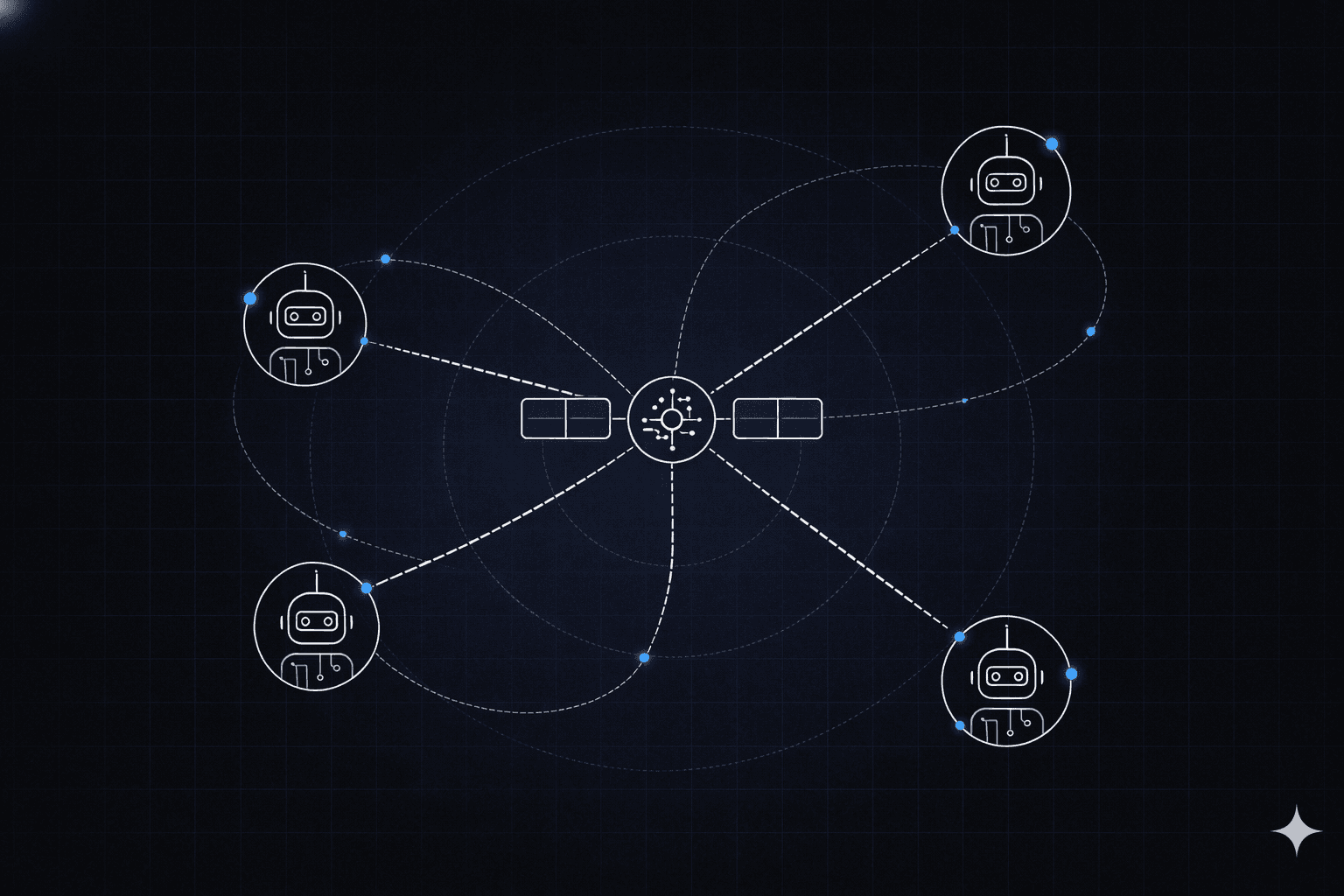
Eighty percent of Fortune 500 companies now run active AI agents built with low-code and no-code tools. Most of those deployments still lack unified governance, deterministic process control, and measurable outcomes, and 71% of CIOs must prove AI's value by mid-2026 or face budget cuts. The path from deployed agents to accountable outcomes runs through orchestration.
This guide evaluates the best AI orchestration tools across four categories: enterprise workflow systems, developer frameworks, cloud-native agent services, and small- and mid-sized business (SMB) automation tools. Each is assessed against five criteria that determine production viability: deterministic control, human-in-the-loop design, auditability, data sovereignty, and time to value.
What Is AI Orchestration?
Search for "AI orchestration," and you'll find developer frameworks, enterprise workflow systems, cloud-managed services, and SMB automation tools all using the same label. Those categories solve different problems and carry different operating trade-offs.
The market is in the midst of an agentic pivot as AI shifts from experimentation to orchestration. Categorization matters: buyers evaluating AI orchestration platforms need to identify the category that best fits their operating model before comparing features.
For enterprise buyers, the practical taxonomy breaks into four categories:
- Developer frameworks: Code-first tools for engineering teams building custom AI applications. Maximum flexibility, maximum build investment.
- Enterprise workflow systems: Tools that coordinate AI agents, human decisions, and business rules across existing enterprise systems with built-in governance. Evaluated on process orchestration, integration and connectivity, and agentic capabilities.
- Cloud-native agent services: Managed services tied to a specific cloud environment.
- SMB automation tools: App-to-app workflow automation with AI features for teams without dedicated IT resources.
The most common evaluation mistake is comparing tools across categories against the same criteria. Identifying the right category first prevents that.
Enterprise Evaluation Criteria for AI Orchestration Tools
Production enterprise environments require five capabilities that determine whether a deployment succeeds at scale. These criteria hold in real workflows where governance, compliance, and business continuity are non-negotiable.
Deterministic Process Control
A finance workflow or compliance check must produce the same result every time, regardless of which AI model generated an intermediate recommendation. Without deterministic control, outcomes become unreliable. Generic large language model (LLM) agents without workflow guardrails produce inconsistent results in complex enterprise processes, making deterministic process logic a production requirement. Rules and workflow logic must execute consistently while AI agents handle reasoning where it adds value.
Human-in-the-Loop by Design
Configurable thresholds that route high-stakes decisions to human reviewers are a core requirement. Without them, a misconfigured agent can approve transactions or trigger escalations at scale before anyone intervenes.
Full Auditability
Every agent action should be logged with the full context of what data was accessed, what decision was made, why, and who approved it. Enterprise buyers often need audit trails that support the Sarbanes-Oxley Act (SOX), the Health Insurance Portability and Accountability Act (HIPAA), and the General Data Protection Regulation (GDPR).
Data Sovereignty
For regulated industries, deployment and data controls are core evaluation criteria. Any AI orchestration platform that replicates or stores data outside the customer's environment introduces compliance risk that scales with adoption.
30 to 60 Days to Value
Enterprise AI initiatives often stall in pilot phases. Time to production is therefore a hard evaluation criterion, not a stretch goal. Ask vendors for specific operational milestones, not demo capabilities.
The Best AI Orchestration Tools at a Glance
The table below maps each tool's category and production-readiness across the five criteria above.
| Tool | Category | Deterministic Control | Human-in-the-Loop | Data Sovereignty | Time to Value | Best For |
|---|---|---|---|---|---|---|
| Elementum | Enterprise Workflow System | Native | Configurable | Zero Persistence / CloudLinks | 30 to 60 days | Multi-system enterprise orchestration |
| UiPath | Enterprise Workflow System | Strong | Built-in | Deployment-dependent | 60 to 90 days | RPA-led automation with AI agents |
| Workato | Enterprise Workflow System | Moderate | Partial | SaaS-primary | 30 to 60 days | Integration-led automation |
| LangGraph | Developer Framework | Build required | Build required | Build required | Months | Engineering teams, custom AI apps |
| CrewAI | Developer Framework | Build required | Build required | Build required | Months | Multi-agent prototyping |
| AutoGen | Developer Framework | Build required | Build required | Build required | Months | Research and custom agent systems |
| Azure AI Agent Service | Cloud-Native | Strong in Azure | Within Azure | Azure-bound | 30 to 60 days | Azure-first enterprises |
| Amazon Bedrock Agents | Cloud-Native | Strong in AWS | Within AWS | AWS-bound | 30 to 60 days | AWS-first enterprises |
| Google Vertex AI Agent Builder | Cloud-Native | Strong in GCP | Within GCP | GCP-bound | 30 to 60 days | GCP-first enterprises |
The Best AI Orchestration Tools, Reviewed
The sections below cover each platform in detail: what it is, where it excels, where it falls short, and who it fits best. Read the entries for the categories most relevant to your operating model first.
1. Elementum
Elementum is a workflow orchestration platform designed to help enterprise teams manage processes that span multiple systems, teams, and decision types. It is built for organizations that need to coordinate automated steps, human input, and AI-driven decisions without moving data into a separate system.
Our Workflow Engine routes each step to the appropriate handler, whether that is a rule, an AI system, or a human decision, with configurable thresholds controlling when human review is required. Elementum's Zero Persistence architecture queries data in real time from systems like Snowflake, Databricks, AWS, and Azure without copying or storing it elsewhere. Customer data remains in existing systems and is not used for training, replication, or storage within the platform.
Elementum integrates with providers such as OpenAI, Gemini, Anthropic, Amazon Bedrock, and Snowflake Cortex, allowing teams to assign different models to different workflow steps without rebuilding logic. Our customers include Sanofi, Elevance Health, and Under Armour.
Enterprise teams typically start with one scoped workflow as a de-risked entry point, then expand into additional processes over time. For organizations consolidating systems, Elementum can also replace legacy workflow, ITSM, CRM, HCM, and procure-to-pay platforms.
Key Features
- No-code workflow builder with drag-and-drop design and native integrations to SAP, Salesforce, Oracle, and 200+ enterprise systems, allowing teams to build and deploy workflows without heavy engineering effort
- Model-flexible orchestration with support for providers including OpenAI, Gemini, Anthropic, and Amazon Bedrock, enabling teams to assign different models to different workflow steps
- Zero Persistence data architecture that queries data in real time, where it already lives, without training on, replicating, or storing it elsewhere
- Unified interface for employee requests that routes tasks across IT, HR, finance, and other business functions
Pros
- Keeps data in existing systems without replication or model training
- Flexible across AI models and cloud environments, reducing vendor lock-in
- Production deployment typically achievable in 30 to 60 days for scoped workflows
Cons
- Initial workflow setup may require internal integration expertise
- No native desktop RPA for legacy UI-based systems
- No public connector marketplace; integrations require direct setup
Pricing
Custom enterprise pricing. Prospective customers book a strategy session to discuss deployment scope and receive a tailored quote.
Who Is Elementum Best For?
Enterprise IT leaders who need to orchestrate AI agents within governed, deterministic workflows across multiple existing systems, particularly in IT service management (ITSM), procurement, HR, and sales operations. Best suited for organizations running modern data infrastructure such as Snowflake, Databricks, BigQuery, or Redshift that want automated business processes without training on, replicating, or warehousing data.
2. UiPath
UiPath is a robotic process automation (RPA) and AI orchestration platform for enterprises with existing automation programs. It supports attended and unattended automation, agentic task execution, and integration across enterprise application stacks.
Key Features
- AI-powered document processing and classification
- Orchestrator platform for managing, deploying, and monitoring automation at scale
- Built-in approval and exception handling workflows for human-in-the-loop design
- Audit logging and role-based access control for compliance-sensitive environments
Pros
- Pre-built component library covers a wide range of document types and system integrations, reducing custom development time for common automation tasks
- Approval and exception handling are configurable without custom engineering, which makes it practical to embed human oversight into existing RPA processes
- Large implementation partner network with trained practitioners and pre-built connectors across enterprise application categories
Cons
- Deployment complexity and total cost of ownership can be significant for greenfield implementations
- The RPA-first architecture can make pure AI-native orchestration workflows feel layered rather than native
- Data sovereignty configurations require careful planning, depending on the deployment model
Pricing
- Per-robot and per-user licensing tiers at published rates
- Enterprise pricing is custom; contact UiPath sales for a quote
Who Is UiPath Best For?
Organizations with established RPA programs that want to extend existing automation investments into agentic AI without rebuilding their automation infrastructure. Finance, insurance, and banking operations teams with high document volumes and existing UiPath deployments.
3. Workato
Workato is an enterprise automation and integration platform with AI orchestration capabilities. It serves both IT and business teams through a low-code interface and supports automation across hundreds of enterprise connectors.
Key Features
- Pre-built connector library covering customer relationship management (CRM), enterprise resource planning (ERP), human resources information system (HRIS), and IT service management (ITSM) systems
- AI Copilot for generating and refining automation recipes
- Multi-step workflows with conditional logic
- Audit logs and role-based permissions for enterprise governance
Pros
- Connector library breadth means most SaaS integrations are available without custom API work
- Business teams can build and modify automations without filing IT requests, which shortens iteration cycles on process changes
- The deployment timeline for integration-heavy SaaS workflows is measurably shorter than that of purpose-built orchestration platforms
Cons
- Human-in-the-loop controls are present but less granular than purpose-built orchestration platforms
- Data sovereignty is primarily SaaS-delivered, which may not satisfy compliance requirements in regulated industries
- Deterministic process control is less mature compared to dedicated orchestration engines for complex multi-agent workflows
Pricing
- Recipe-based team plans are available at published rates
- Enterprise pricing is custom; contact Workato sales for a quote
Who Is Workato Best For?
Mid-market and enterprise operations teams running integration-heavy workflows across SaaS applications, particularly in Revenue Operations (RevOps), HR operations, and finance operations. Teams that need broad connector coverage, low-code ownership, and don't require stringent data sovereignty controls.
4. LangGraph
LangGraph is an open-source AI orchestration framework developed by LangChain for building stateful AI agent applications. It uses a graph-based execution model that gives engineering teams granular control over agent behavior, conditional paths, and iterative loops.
Key Features
- Graph-based workflow modeling with node-level state management
- Multi-agent architectures with controllable agent-to-agent communication
- Streaming and asynchronous execution support
- Integration with LangChain's model abstraction and tooling libraries
Pros
- Graph-based execution model supports conditional logic and iterative loops that higher-level platforms often abstract away, giving engineering teams exact control over agent behavior
- Open-source with no licensing cost at the framework level; teams own the full codebase
- Active community development means capability updates are frequent and not tied to a vendor release cycle
Cons
- All governance, auditability, human-in-the-loop, and data sovereignty controls must be built and maintained by the engineering team
- Reaching production-ready enterprise deployment requires significant custom engineering beyond the framework itself
- Time to value is measured in months, not weeks
Pricing
LangGraph is open-source and free to use. LangChain offers a commercial observability and deployment platform (LangSmith) with paid tiers. Enterprise pricing is available by quote.
Who Is LangGraph Best For?
Engineering teams with deep Python expertise who need granular control over agent architecture for custom applications that no existing platform addresses. Research environments and organizations with proprietary workflow logic that can't be delegated to a vendor-managed system.
5. CrewAI
CrewAI is an open-source AI orchestration framework that lets developers define teams of AI agents with distinct roles, goals, and tools. It is used primarily for rapid prototyping of cooperative multi-agent systems.
Key Features
- Role-based agent definition with configurable tools and memory
- Sequential and hierarchical task execution patterns
- Lightweight integration with major LLM providers
- Commercial enterprise tier alongside the open-source core
Pros
- Role-based agent definition reduces the setup required to model cooperative multi-agent workflows; teams can go from concept to running prototype faster than with lower-level frameworks
- Lightweight footprint means less infrastructure to stand up for early-stage experimentation
- Commercial support options are available for teams that need to move from prototype to production
Cons
- Enterprise governance requirements, including auditability, deterministic control, and data sovereignty, require custom engineering; the framework doesn't provide them natively
- Production deployments at enterprise scale require significant infrastructure investment beyond the framework itself
- Not designed for no-code or business-team ownership
Pricing
- Open-source and free to use
- Commercial enterprise tier available; contact CrewAI for pricing
Who Is CrewAI Best For?
AI engineering teams prototyping cooperative multi-agent workflows before committing to a full orchestration platform, particularly for narrowly scoped use cases where custom role-based agent logic adds value and engineering resources exist to own the build and maintain it in production.
6. AutoGen
Microsoft's AutoGen is an open-source AI orchestration framework for building conversational multi-agent systems. It supports agent-to-agent communication patterns, human participation in loops, and flexible execution modes.
Key Features
- Conversational agent architecture with configurable interaction patterns
- Support for both fully automated and human-in-the-loop conversation flows
- Integration with Azure OpenAI and third-party model providers
- Extensible tool and function calling capabilities
Pros
- Human-in-the-loop conversation flows and fully automated flows can coexist within the same framework, which reduces the engineering required to manage escalation paths
- Broad third-party model provider support means teams aren't limited to Azure OpenAI
- Frequent updates from the Microsoft research team, with architecture decisions informed by active academic work on multi-agent reasoning
Cons
- Production governance, auditability, and compliance features are team-built, not platform-provided
- Operational maturity requires significant investment in infrastructure and monitoring beyond the framework itself
- Not a turnkey solution for business-owned workflows
Pricing
- Open-source and free to use
- Consumption-based pricing applies to Azure OpenAI usage when running via Azure
Who Is AutoGen Best For?
Enterprise AI research teams and Microsoft-aligned organizations with strong engineering resources who want to explore multi-agent conversational patterns. Teams are building internal tooling and evaluating agentic architectures before committing to a managed agent service.
7. Azure AI Agent Service
Azure AI Agent Service is Microsoft's managed, cloud-native agent platform that provides multi-agent orchestration within the Azure ecosystem. It integrates with Azure OpenAI, Microsoft Fabric, and Azure's security and identity framework.
Key Features
- Managed infrastructure with built-in scaling and availability
- Native integration with Microsoft Entra ID, Key Vault, and Policy for identity and governance
- Multi-agent coordination with built-in monitoring through Azure Monitor
- Event-driven execution and integration with Azure Logic Apps and Functions
Pros
- Managed infrastructure means engineering teams don't need to provision or maintain agent runtime environments
- Organizations already running on Microsoft 365, Dynamics, or Azure Data services can connect agents to those systems without building custom connectors
- Azure's existing compliance certifications (FedRAMP, SOC 2, ISO 27001) apply to workloads on the platform, which reduces the compliance work required for regulated deployments
Cons
- Data sovereignty and governance portability are tied to the Azure control plane; migrating to another environment requires rebuilding the governance layer
- Multi-cloud or cloud-agnostic orchestration requires additional tooling outside the platform
- Vendor dependency risk increases as orchestration logic deepens into Azure-specific services
Pricing
Azure AI Agent Service is consumption-based through an Azure subscription. Costs vary by compute, model usage, and storage. Contact Microsoft Azure for current rate cards.
Who Is Azure AI Agent Service Best For?
Enterprises already standardized on Azure infrastructure that need managed AI agent orchestration. Organizations that require tight integration between AI agents and Microsoft 365, Dynamics, or Azure Data services.
8. Amazon Bedrock Agents
Amazon Bedrock Agents is AWS's managed multi-agent orchestration service, built on the Bedrock foundation model platform. It lets enterprises build, deploy, and manage AI agents with access to enterprise data sources via Knowledge Bases and execute actions via defined APIs.
Key Features
- Access to a broad model catalog, including Anthropic Claude, Meta Llama, and Amazon Titan
- Knowledge Bases for retrieval-augmented generation (RAG) at scale
- Native integration with AWS Identity and Access Management (IAM), CloudWatch, and virtual private cloud (VPC) for security and monitoring
- Multi-agent collaboration through supervisor-agent architectures
Pros
- Teams can swap foundation models without changing agent logic, which preserves optionality as new models become available through the Bedrock catalog
- Knowledge Bases handle the retrieval infrastructure at scale, removing the need to stand up and maintain a separate vector database
- Governance controls are inherited from the existing AWS security posture, reducing the setup required for organizations already using IAM and CloudWatch
Cons
- Governance portability is AWS-specific; multi-cloud orchestration requires additional architecture outside the platform
- Complex cross-system workflows spanning non-AWS environments require custom integration work
- Full production deployment for complex use cases requires significant AWS expertise
Pricing
Amazon Bedrock Agents is consumption-based through an AWS account, charged per API call and model usage. Pricing varies by model provider. See the AWS pricing page for current rates.
Who Is Amazon Bedrock Agents Best For?
AWS-native organizations that need to give AI agents access to enterprise data stored in S3, RDS, or Redshift with flexible model selection. Teams with existing AWS security and compliance infrastructure who want to extend it to AI agent workflows.
9. Google Vertex AI Agent Builder
Google's Vertex AI Agent Builder is a managed environment for creating, deploying, and orchestrating AI agents within the Google Cloud ecosystem. It supports conversational and task-based agents with native access to Google's model portfolio, including Gemini.
Key Features
- Native Gemini model integration with support for text, image, and structured data inputs
- Integration with BigQuery and Google Workspace for enterprise data access
- Pre-built agent templates for common enterprise use cases
- Vertex AI's machine learning operations (MLOps) tooling for model management alongside agent deployment
Pros
- Pre-built templates reduce initial development time for common use cases; teams don't start from a blank configuration for standard workflows
- BigQuery integration means agents can query large-scale analytics datasets without a separate data access layer
- MLOps tooling lets teams manage agent models and standard ML models in a single environment, which reduces toolchain fragmentation for GCP-native data science teams
Cons
- Governance and compliance controls are GCP-specific; portability to other environments requires architectural rework
- Cross-cloud orchestration requires workarounds outside the platform
- Deepening dependency on GCP services reduces flexibility over time
Pricing
Google Vertex AI Agent Builder is consumption-based through a GCP account, charged per session or API call. Contact Google Cloud for current pricing.
Who Is Google Vertex AI Agent Builder Best For?
Organizations with data and analytics infrastructure on Google Cloud that need AI agents integrated with BigQuery and Google Workspace. Teams are building agents that process structured data alongside documents, images, or other non-text inputs.
How to Choose the Right AI Orchestration Platform
The right platform depends less on feature lists and more on which tool category best matches how your organization builds, operates, and governs workflows.
Start With Category, Not Features
Comparing tools across categories against the same criteria produces misleading results. An SMB automation tool will always lose on governance; a developer framework will always lose on time to value. Neither comparison tells you anything useful.
Answer these three questions to identify your category before comparing features:
- Who builds and maintains the workflows? Dedicated AI engineers who want full architectural control should start with developer frameworks such as LangGraph, CrewAI, and AutoGen. Operations or business teams that need no-code ownership should consider enterprise workflow systems such as Elementum, UiPath, and Workato.
- What kind of process are you automating? Simple trigger-action tasks across a handful of apps are well-suited to SMB automation tools like Zapier and Make. Multi-system workflows that must produce consistent, auditable outcomes require deterministic orchestration with human-in-the-loop controls.
- Where does your data live, and where must it stay? Organizations standardized on a single cloud get the most out of cloud-native services, such as Azure AI Agent Service, Amazon Bedrock Agents, or Google Vertex AI Agent Builder. Organizations that need cloud-agnostic, model-agnostic orchestration while keeping data in place should evaluate enterprise workflow systems with a Zero Persistence architecture.
Once the right category is clear, compare only the tools within it.
When to Choose an Enterprise Workflow Orchestration System
Multi-system workflows that require consistent outcomes, auditability, and compliance call for enterprise workflow orchestration. Four factors separate this category from the alternatives:
- Cross-system process ownership: Orchestration that spans HR, finance, IT, and operations in a single governed framework
- Compliance requirements: SOX, HIPAA, GDPR, and similar regulations require audit trails and data controls that SMB tools and developer frameworks can't deliver natively
- No-code business ownership: Business and operations teams need to own and modify workflows without engineering dependency
- Universal deployment: The ability to connect to existing infrastructure (Snowflake, Databricks, SAP, Salesforce, ServiceNow) without data migration
If your organization meets two or more of these criteria, enterprise workflow orchestration is the right starting category.
Choosing a Platform That Delivers in 60 Days
The choice of an AI orchestration platform is a question of architecture. Governed, auditable, multi-system orchestration is a different problem than framework-based prototyping, cloud-native agent services, or SMB automation. Identifying the right category before comparing features is the decision that determines whether an evaluation leads to deployment or to a second round of pilots.
For enterprises running multi-system workflows across regulated functions, governed orchestration is the correct category. Frameworks require months of engineering before reaching production. Cloud-native services deliver control within a single vendor's environment. SMB tools handle individual workflows but can't govern cross-system processes at enterprise scale.
We built Elementum for the enterprise orchestration problem. We coordinate AI agents, human decisions, and business rules as equal participants in every workflow. Our patented Zero Persistence architecture means we never train on, replicate, or warehouse your data. Our Workflow Engine holds 20,000+ individual capabilities built over four years.
Customers start with a high-value workflow, prove ROI, and expand across functions on their own timeline, with no cutover events, rip-and-replace requirements, or consultant dependency.
Contact us to see how Elementum fits your AI strategy.
FAQs About the Best AI Orchestration Tools
These are the questions IT and operations leaders most often raise when evaluating AI orchestration platforms for enterprise deployment.
What Is the Difference Between AI Orchestration and AI Automation?
Automation handles single, repetitive tasks. Orchestration coordinates multiple AI agents, human decisions, and business rules to execute complex end-to-end workflows across enterprise systems. The practical difference shows up in governance: automation follows a rule; orchestration governs a process with accountability at every step.
Do You Need Deterministic or AI-Directed Orchestration?
Deterministic orchestration works best for consistency-critical processes: compliance workflows, financial approvals, and employee onboarding. AI-directed orchestration is well-suited to adaptive tasks such as reading unstructured documents, classification, and summarization. A production-ready architecture often combines both.
How Do You Integrate AI Agents With Existing Systems Without Replacing Them?
Integrating AI agents without ripping and replacing requires pre-built enterprise connectors, semantic data models that map to your existing schema, and APIs designed for agent-level consumption. The right platform works alongside your current infrastructure, queries data where it lives, and executes workflows across systems you already run without data migration. Elementum's CloudLinks architecture handles this through real-time data queries with patented Zero Persistence: your data stays in your environment throughout.
What Is Zero Persistence Architecture and Why Does It Matter?
Zero Persistence means an orchestration platform never stores, replicates, or trains on your data. Elementum's CloudLinks query data in real time from sources like Snowflake, Databricks, AWS, and Azure, and nothing leaves your environment. For regulated industries, Zero Persistence is often the deciding factor between a compliant deployment and one that introduces unacceptable data governance risk.
How Long Does It Take to Deploy an Enterprise AI Orchestration Platform?
Deployment timelines vary significantly by category. Developer frameworks require months of engineering work before reaching production. Cloud-native services take 30 to 60 days in aligned environments. Purpose-built enterprise platforms like Elementum target 30-day production deployment with full enterprise rollout in 60 days: a meaningful advantage when AI ROI must be demonstrated against an executive deadline.
Keep Reading
9 Best Workflow Orchestration Tools in 2026
7 Best AI Workflow Automation Tools in 2026
What Is Agentic AI Orchestration? An Enterprise Guide
9 IT Process Automation Tools: Top Platforms for Automating IT Workflows
The Enterprise Guide to Agentic AI for ITSM

Deterministic vs. Probabilistic AI: The Enterprise Guide to Building Workflows That Scale
\