
What Is Palantir’s Ontology, and Where Does Your Data Actually Go?
Ontology shows up in almost every conversation about Palantir. It's on the sales calls, the product pages, and the Foundry documentation. For a term that carries this much weight, buyers rarely get a straight answer to a simple question: once your data enters the Ontology, where does it actually live?
This piece walks through what Palantir's Ontology is, how data gets into it, and why that architecture holds even when Foundry runs inside a customer's own cloud. The rest of this article covers the ingestion mechanics, the staffing implication, and how Elementum's approach differs.
What Is Palantir's Ontology?
Palantir's own documentation describes the Ontology as an operational layer that sits on top of the datasets, virtual tables, and models integrated into Foundry, connecting them to real-world counterparts such as shipments, patients, or transactions. In practice, it's a structured business model: objects represent entities, links represent relationships, and actions govern how those objects change.
Ontology also sits underneath Palantir's Artificial Intelligence Platform (AIP), governing how agents and models are allowed to read and act on the business. Ontology is what makes a raw model safe to point at a real company. That much is real.
How Data Gets Into the Ontology
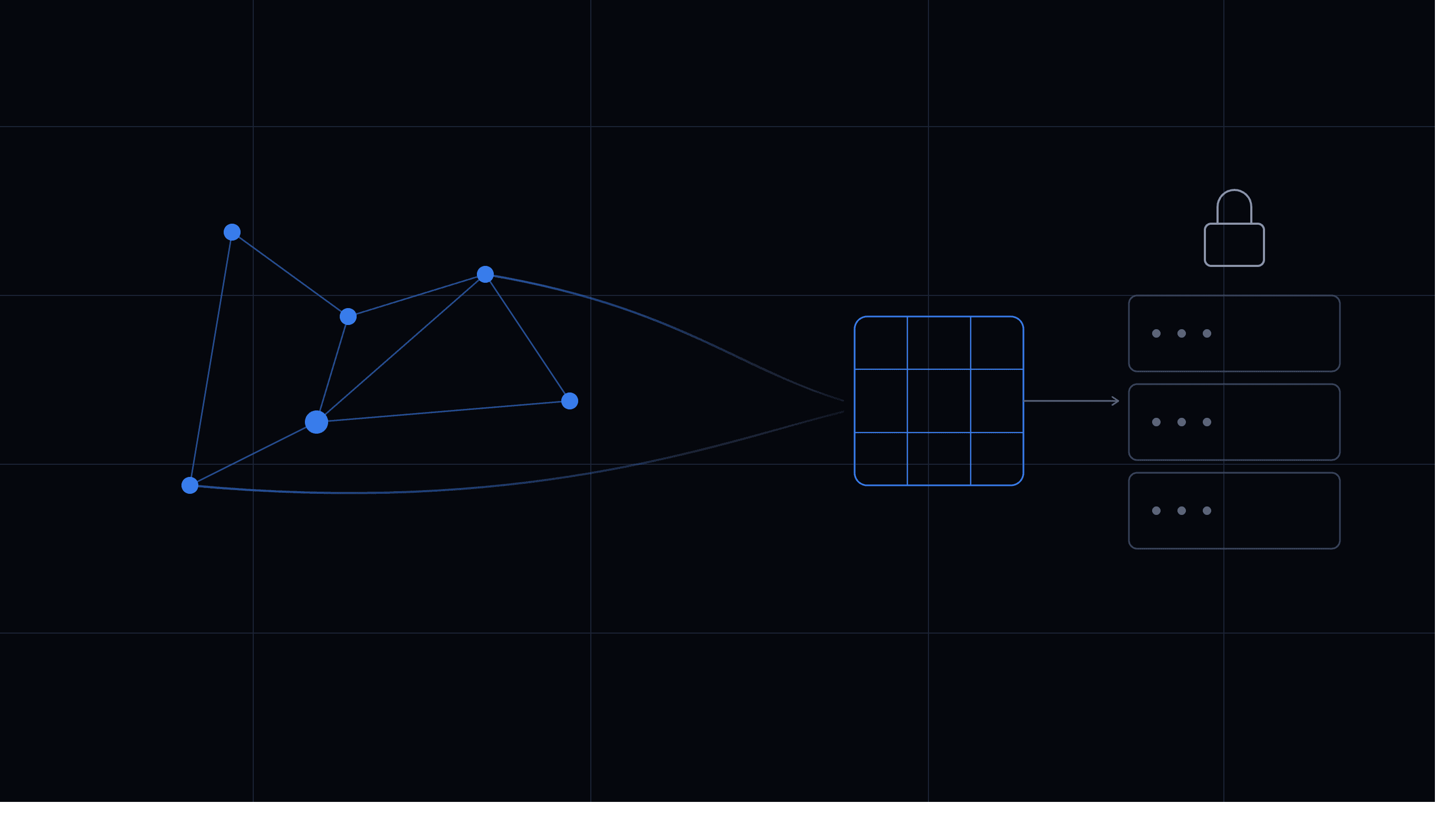
Building an Ontology starts with ingestion. Foundry's Object Data Funnel reads data from Foundry datasources and indexes it into object databases, keeping that indexed copy in sync as source systems update.
Connecting sources, defining pipelines, and mapping the result into object types has to happen before any application, agent, or dashboard can use the Ontology. What gets queried afterward is Foundry's own indexed copy of the data.
Does Hosting Foundry Yourself Change This?
Not exactly. Palantir can deploy Foundry inside a customer's own cloud tenant, on AWS, Azure Government, or Oracle Cloud. Even in that configuration, Foundry ingests customer data from a variety of data sources before the Ontology can use it.
Hosting Foundry in your own account changes who controls the infrastructure underneath it. It doesn't change the ingestion step itself. The Ontology still needs its own indexed copy of the data, regardless of whose cloud that copy sits in.
The Staffing Implication
The ingestion step is also where the Forward Deployed Engineer model comes in. Mapping a customer's source systems into object types, link types, and actions is specialized, judgment-heavy work. Palantir's own engineers typically lead it, at least at first, and often stay involved through later workflow additions.
The data-residency question and the staffing question turn out to be the same question, seen from two angles. Once an enterprise has a copy of its data living inside a proprietary object structure, someone still has to maintain the mapping that keeps it current. That's the harder version of owning everything else: the data can sit in your own cloud, and you can still need someone else's team to run it.
Where Elementum's Data Actually Lives
Elementum's Workflow Engine also maps business meaning onto data. Elements, Elementum's version of that layer, define entities, relationships, and validations much like Ontology objects do. The difference is what happens underneath them.
Elements connect to live data through CloudLinks and query it in place. There's no ingestion step, no separate object store, and no indexed copy sitting apart from the source system. Nothing to sync. When a workflow reads a customer record from Snowflake or Databricks, it's reading the live record.
Deployment speed reflects the difference. Production typically reaches deployment in weeks, depending on scope and data readiness, because there's no object structure to build and populate before work can start. Teams can reason through deterministic and probabilistic logic, where fixed rules and AI judgment divide the work, without waiting on a data-modeling phase first.
Before evaluating any AI orchestration platform, it's worth asking the ingestion question directly. Does using this system require a new, standing copy of your data to exist somewhere, or does it work against the data you already have?
Elementum's answer starts with Open Orchestration: the flexibility to swap AI models, clouds, or tools without rebuilding workflow logic. The platform never becomes the place your data has to live.
It extends to Orchestrated Intelligence, right-sizing spend across deterministic rules, AI agents, and human decisions. Business logic, not a data-ingestion phase, is what scales as workflows expand.
And it holds on Zero Persistence: we never train on, replicate, or warehouse your data.
Many of our customers start with one workflow, prove the savings, and expand into adjacent processes. Among orchestration platforms in this category, we have the production track record for replacing legacy SaaS at enterprise scale, with named customers including Sanofi, Snowflake, Under Armour, and Elevance Health.
Contact us to map deterministic orchestration into your architecture and the rest of your AI roadmap.
FAQs About Palantir's Ontology
These are the questions data and platform teams most often ask once they get past the marketing description of Ontology.
What is Palantir's Ontology?
Palantir's Ontology is an operational layer inside Foundry and AIP that represents a business as objects, links, and actions, then governs how AI agents, models, and users are allowed to read or change that data.
Does Palantir's Ontology require copying my data into Foundry?
Yes, Palantir's Ontology requires copying data into Foundry. Foundry's Object Data Funnel indexes data from connected sources into its own object databases, and the Ontology works against that indexed copy rather than querying source systems directly.
Does self-hosting Foundry avoid that data copy?
No, self-hosting Foundry doesn't avoid that data copy. Even when a customer runs Foundry inside their own cloud tenant, Foundry still ingests the data before the Ontology can use it. Self-hosting changes who controls the infrastructure, not whether an indexed copy exists.
How is Elementum's approach different from Palantir's Ontology?
Elementum's approach differs mainly in how data is accessed. Elements map business meaning onto data the same way Ontology objects do, but they connect to live data through CloudLinks instead of an ingested copy.
Does Ontology mapping require Forward Deployed Engineers?
Typically, yes. Ontology mapping usually requires Forward Deployed Engineers, at least initially, since mapping source systems into object types and link types is specialized work that Palantir's engineers usually lead.
Keep Reading

The Data Prison You Didn't Know You Built
The Enterprise Guide to Agentic AI for ITSM
Agentic AI for ITSM: A Practical Architecture for Enterprise IT
What Is Agentic AI Orchestration? An Enterprise Guide

Agentic AI vs. Generative AI: Why Enterprise Workflows Need Both
AI Agent Management: How Enterprises Govern Agents at Scale