
The Model Was Never the Product
Palantir's CEO Alex Karp was just on CNBC's Squawk Box. The short version, if you're not going to press play: Karp says his enterprise customers are livid. They're paying for tokens, getting little back, and quietly shipping their data and IP to the frontier labs to do it. A raw model, he argues, is just a resource — the layer around it, what he calls "ontology," is what makes it safe and useful inside a real company. His prescription: own the means of production — your data, your weights, your compute — and stay model-agnostic. Right. Now here's what he left on the table.
Karp is loud. The argument underneath the volume is not. It's the most clear-eyed thing a public-company CEO has said about enterprise AI all year — and most of the industry is going to pretend it didn't happen.
So let me repeat it, quietly.
The model is not the product.
Everyone spent two years acting like the frontier model was the whole game. Bigger model, better company. Right? Wrong. A raw LLM inside an enterprise is a brilliant intern with no security clearance, no memory of your business, and a habit of remembering everything you tell it. On its own, it's a liability in a genius costume.
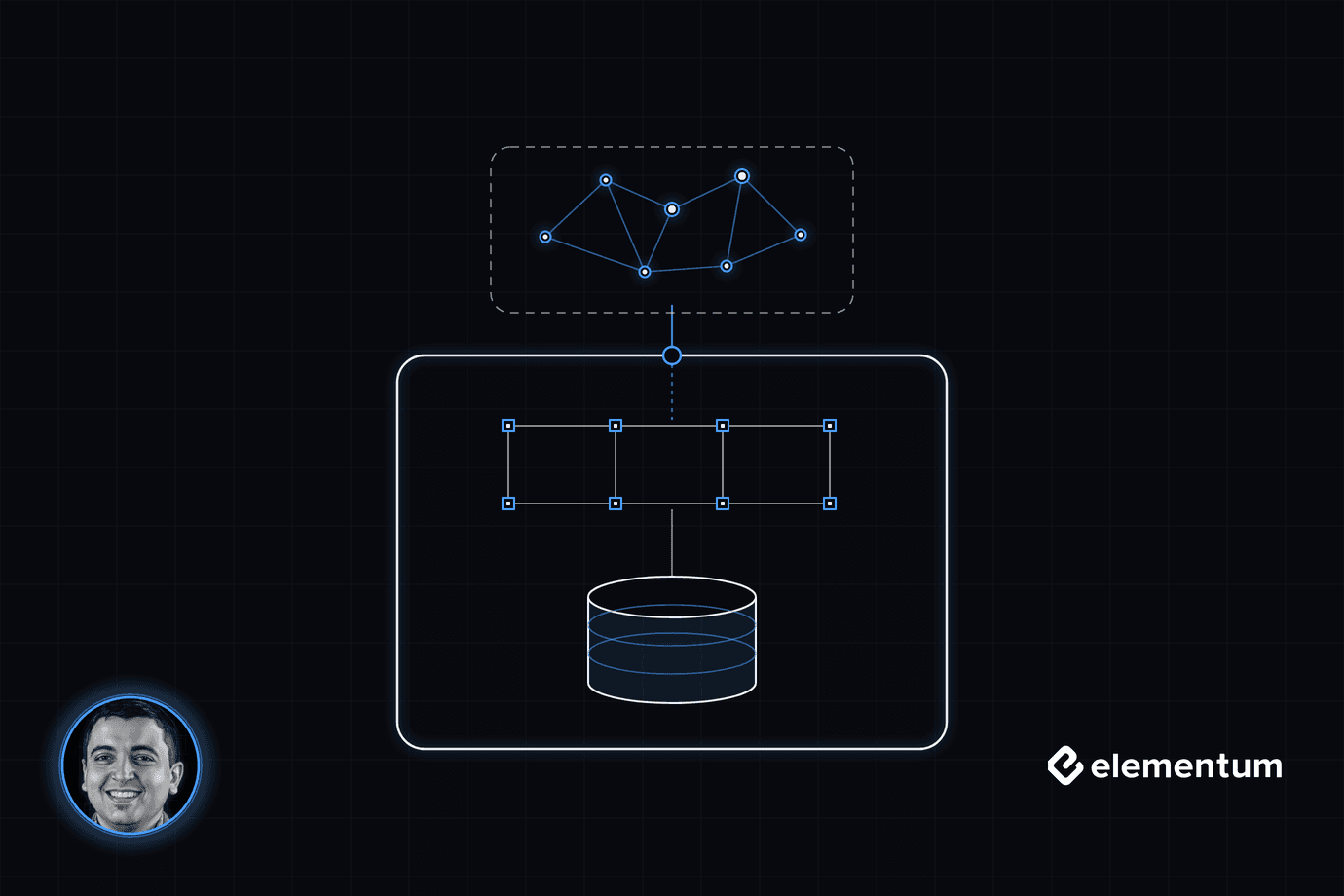
What makes it useful — safe, precise, governed — is the layer around it. Karp calls his version "ontology." Fine. Call it whatever you like. The point is the one we've been making since day one: agents reason, engines govern. The model reasons. Something deterministic has to govern. That governing layer is where the value lives, where the safety lives, and — not by accident — where the money lives.
Then he gets to the part that should make every CIO sit up straight.
Who owns your data? Where is it cached? Is your IP quietly training the thing your competitor rents next quarter? Karp's word for what you're handing over is "alpha" — the edge that makes your business your business. And the uncomfortable truth is that the standard way AI got sold to the enterprise requires you to ship that alpha somewhere else just to get any value back.
To use the tool, you move your business into someone else's house.
That's not an AI problem. That's the SaaS problem wearing a new hat.
For thirty years the deal was simple: give us your data, we'll give you software, and you'll rent your own operations back from us forever. AI didn't break that model. It supercharged it. Now you're not just renting the software — you're feeding the landlord the one thing that made you worth anything.
Here's where I'd push Karp one step further, because this part isn't a promise you have to trust. It's an address.
Your data already lives in Snowflake or Databricks. That's the house. The AI-native move isn't to copy it out to the model's house — it's to bring the intelligence to where the data already sits, and never move it. Elementum runs there, natively. The reason we can answer who owns the data, where is it cached, is it being transferred isn't a policy page. It's the architecture. The data never leaves, because there's nowhere for it to go.
On the model itself, Karp is right again: stay agnostic. Model lock-in is just vendor lock-in with better PR. The frontier is a leapfrog race — whoever's ahead today is behind in six months. If your business is welded to one lab's weights, you don't have a strategy, you have a hostage situation. Swap the model. Keep the engine. Keep the data. Keep the alpha.
The scoreboard
| Old SaaS | your data · their house · your rent |
| Token-era AI | your data · their house · your alpha · your rent |
| AI-native | your data · your house · your engine · your edge |
One of these is not like the others.
Karp says the enterprises he talks to are livid. I believe him — we're in the same rooms. That anger is just the sound people make right before they change how they buy. The companies that win the next decade won't be the ones with the best model. Nobody owns the best model for longer than a quarter. They'll be the ones who own the means of production: their data, their weights, their engine, their edge.
Rent the model. Own everything else.
One last thing — and it might be the only thing that matters.
Karp is right that you should own your data. But look at where his own architecture leaves you: to get the value out of Palantir, your data has to go into Palantir. The ontology sits on top — but the data sits with them. That's the ceiling on the whole pitch.
We don't have that ceiling. Elementum runs inside your data cloud — your accounts, your walls. We work on your data where it already lives. It never moves, and it never lands in our platform, because there's no platform for it to land in.
Palantir keeps your data. We don't.
Goodbye, SaaS.
— Nader