
MuleSoft Alternatives: Why Integration Isn't Orchestration

A MuleSoft alternative evaluation may start with a renewal quote. It may end with a shortlist of other integration platforms as a service (iPaaS) vendors. That path fixes the licensing problem. Loan approvals and supplier onboarding may still span multiple systems and manual handoffs; IT access requests may too. In that case, swapping one iPaaS for another moves the data faster. The process remains.
One decision is whether to keep, renegotiate, or replace MuleSoft as an iPaaS. The second decision concerns the work you actually want done. Complete business processes may involve people alongside automated logic. That logic can call AI agents. This work may belong to a different category.
Why enterprise teams look for MuleSoft alternatives
Cost and pricing complexity can start an alternatives evaluation. They compound with a skills constraint and a strategic one. Usage-based packaging can make the total contract harder to forecast than a simple per-seat license. The challenge grows as the number and volume of integrations change.
AI usage can add another consumption meter. Usage-based AI pricing makes spend sensitive to workflow volume, data patterns, and metering rules. The skills constraint shows up in the backlog. It emerges when integration work depends on specialist developers rather than business-analyst self-service. Teams report low-code usability issues in a Gartner Peer Insights review.
MuleSoft moved from Leader to Challenger in Gartner's 2025 Magic Quadrant for iPaaS. It kept its Leader position in Gartner's separate API Management evaluation. That split gives teams with SAP-, Oracle-, or Azure-first stacks a reason to check MuleSoft's roadmap fit.
What integration middleware is built to do
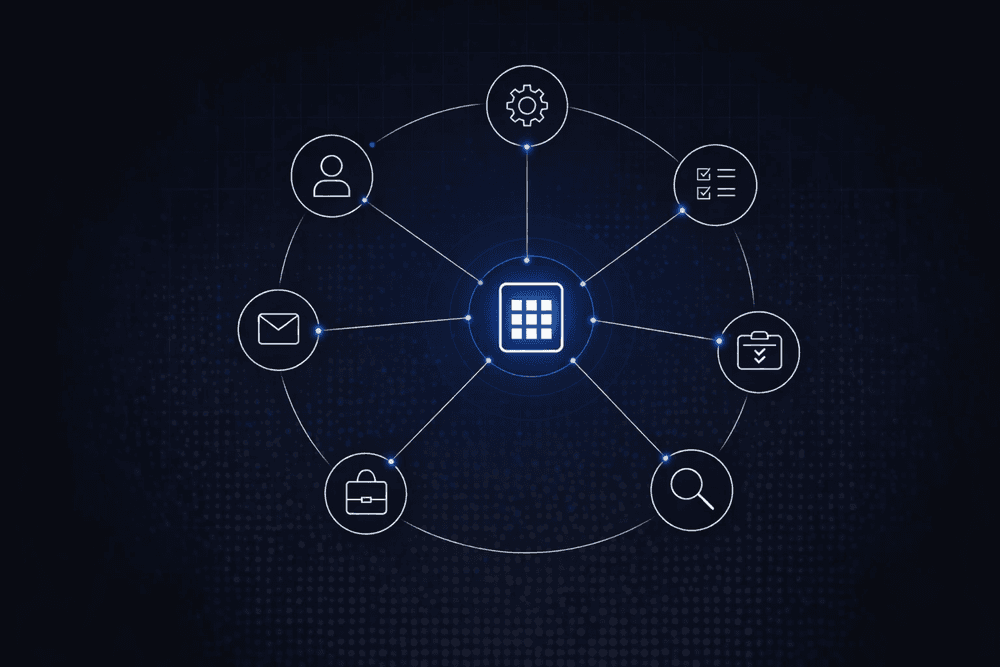
An iPaaS connects applications and data and does it well. Mistaking that function for process execution is where a second round of spending can begin. Integration middleware develops, executes, and governs integration flows across systems.
Durable information that must survive between invocations requires state management. That state management requirement is the core design requirement. The state changes the design.
Separating connectivity from process state keeps integration flows simpler. A stateless integration design does not retain the status of a process between invocations. In that design, a separate engine must maintain a durable process state.
What business process management adds
State is where the categories part company. Business Process Model and Notation (BPMN), under the BPMN standard, describes the ordered activities that make up a process. A platform that runs those activities has to track where each instance stands, from the first step to the last.
Integration is now one part of a wider automation stack. Deterministic workflows, event-driven integrations and agentic automation run side by side in that stack, with human-in-the-loop treated as a first-class capability.
An iPaaS moves data between systems and has no requirement to track a process's state. That gap sets the evaluation criteria. Score any shortlist against the following five functions before comparing price or connector count.
- State across time: A loan origination or compliance review runs for days. The engine has to remember which steps are done, which are waiting, and on whom.
- Long-running transactions with compensation: When a later step fails, a database rollback can't undo earlier completed steps. Process compensation uses a specific action to reverse an earlier step if the larger process fails.
- Human tasks: Assigning an approval to a named owner, escalating when it sits past a service-level agreement (SLA), and delegating when the owner is out.
- Per-instance audit trail: Process-level logging and control provide visibility across execution, rather than only message transit.
- Business-level exception routing: A rejected approval or a regulatory hold is a business exception. So is a claim that requires manual review. It needs a governed path to a person.
Any shortlist should answer all five when the problem is process execution rather than data movement. A team that buys integration to fix a process problem gets better data flow. The process itself stays fragmented.
Where AI agents break the integration model
AI agents can expose the missing process layer clearly. Without a governing process, an agent can make variable decisions while holding system access. An agent may retain or retrieve its own memory, but that memory does not replace the durable process state a run still needs. Deterministic automation follows fixed rules: if X, do Y.
An agent interprets a goal and picks a path, so the same input can produce different outputs. That's useful for reading a supplier contract. It's dangerous for approving the payment. The design must distinguish probabilistic agent decisions from deterministic automation.
MuleSoft's Agent Fabric provides tooling for agent registration and routing. Process owners should ask whether the business process meets Gartner's BPM requirements. Owners should identify the step that waits on a human-in-the-loop checkpoint. They should also identify which completed action would need to reverse if a downstream step fails. Finally, they should ask what record survives for the auditor.
Agent registration and routing alone do not provide the process state needed to track each run. Agent calls also create a separate cost risk. Forrester's read on H2 2025 earnings described the shift from seat-based licenses to usage-based AI pricing as a major structural change in software economics, warning that it pushes enterprises to absorb cost volatility as spend becomes sensitive to data patterns, workflow shifts, and metering rules they can't fully see.
Consumption-based AI charging follows that model. An architecture can call a model only on the steps that need one. It can run the rest as fixed logic. That design limits exposure to unpredictable usage costs.
Shortlist MuleSoft alternatives by problem
Shortlist by the problem you're solving. Three categories commonly appear under "MuleSoft alternatives," but they solve different problems. The third can reduce the number of applications you manage. Choose the category first.
If the problem is the integration contract itself, the candidates are other iPaaS vendors. SAP Integration Suite, Boomi, and Workato are all evaluated alongside MuleSoft in the 2026 Gartner Magic Quadrant for iPaaS. Each markets agent tooling of its own. Check that tooling separately for the process state functions Gartner requires. You may get different pricing mechanics and connector coverage, but you will still need to address the process problem.
If the problem is process execution, evaluate BPM and low-code platforms against Gartner's minimum requirements. Those requirements include process modeling, a process repository, a process execution engine, and state or rule engines. A process repository is a shared store for process models and related definitions.
If the application itself is expensive and slow, consider the third category. The application could be the ticketing front door or procurement portal. It could also be a contract intake tool. An AI-native enterprise application platform can replace that software-as-a-service (SaaS) application outright. Elementum's Workflow Engine runs the complete process. A deterministic engine sequences the steps. It calls AI agents where reasoning is required. It executes automated logic elsewhere and routes exceptions and approvals to the people who own them.
Each system you replace leaves fewer applications to manage. Replacing only a manual process can remove manual work without reducing the number of applications. When a system is retired, the application count drops. Fewer licenses, too.
Elementum is an AI-native enterprise application platform that replaces the application or manual process that previously ran the business process. MuleSoft or another iPaaS handles data integration. Elementum processes update systems you keep through application programming interfaces (APIs). Elementum deploys alongside those systems of record.
How Elementum fits in
Elementum is the AI-native enterprise application platform, the AI-native replacement for legacy SaaS. Our AI Agents run under deterministic guardrails. The engine invokes a model only on the steps that need one, working across OpenAI, Gemini, Anthropic, and Snowflake Cortex. Configurable decision thresholds determine when a workflow requires human review. We log every action.
The license is Zero Token Burn: a flat annual fee per application, with no per-seat license, no per-conversation charge, and no per-action charge for AI. Customers still pay for the model tokens their processes consume. We do not meter AI.
Our Workflow Engine runs inside your own Snowflake tenant. Databricks is a live second track, currently an MVP (minimum viable product). CloudLinks queries data in place over encrypted connections, so the platform can access tenant data without moving it into the temporary environment that runs each process.
Once a run completes, that environment retains nothing. Your data is always yours: we never train on, replicate, or warehouse your data. You can swap any of the four things that create lock-in: your models, your data, your data platform, and your interface, without breaking the process.
Among AI-native application platforms in this category, we have the production track record for replacing legacy SaaS at enterprise scale, with named customers including Sanofi, Snowflake, Under Armour, and Elevance Health.
Contact us to map an AI-native application replacement into your integration architecture and the rest of your AI roadmap.
FAQs about MuleSoft alternatives
These are the questions IT and integration leaders most often raise when narrowing down MuleSoft alternatives.
Can you use MuleSoft for business process execution?
You can use MuleSoft's agent tooling to register and route agents and tools, but that's not full business process execution. Gartner's BPM-platform category is where stateful, long-running process execution lives, with human tasks, compensation, and an audit trail for each process instance. That's a different product category from iPaaS.
Why might your team replace MuleSoft?
Teams replace MuleSoft over cost and pricing concerns, dependence on specialized integration skills, low-code usability issues, or fit with their existing technology stack. MuleSoft's move from Leader to Challenger in Gartner's 2025 Magic Quadrant for iPaaS gave those concerns an analyst-level reference point.
Which iPaaS platforms should you compare with MuleSoft?
You can compare MuleSoft with Boomi, Workato, and SAP Integration Suite, all evaluated alongside it in the 2026 Gartner Magic Quadrant for iPaaS. Gartner now lists Informatica under Salesforce in the same report. Category placement in that Magic Quadrant does not establish the stateful process functions Gartner requires of a BPM platform.
Do you still need a process engine after replacing MuleSoft?
Yes. An iPaaS swap changes who moves your data and on what terms. Your team still needs an engine for state across days, human approvals, compensation when a step fails, and an audit trail per process instance. That engine could be a BPM platform or an AI-native enterprise application platform that replaces the application outright.
Keep Reading
AgentForce Alternatives for Enterprise AI Agent Platforms
Appian Alternatives for AI-Native Workflow Platforms
7 Top Coupa Alternatives in 2026
Top n8n Alternatives for Enterprise Workflows in 2026
7 Pega Alternatives for AI-Native Workflow Orchestration in 2026
9 Best Palantir Alternatives for AI Agent Orchestration in 2026