
The Pilot That Actually Works
Most enterprise AI pilots end the same way.
A team gets excited. They build a demo. The demo is great. Budget gets approved. Then the pilot drags. The scope creeps. Six months in, nobody's in production. And the question from leadership is: what happened?
We've watched this enough times to have a strong opinion. Here's what a pilot that actually works looks like.
Start Narrow, Not Small
Everyone says start small. Pick something low-stakes. Easy to prove.
That's the wrong instinct. Low-stakes wins prove low-stakes things. You succeed, and you've shown that AI can handle something nobody cared about. That's not the evidence that moves an organization.
Start narrow instead. Pick something that matters. Scope it tight. One workflow. One team. A defined set of transactions. Narrow enough to move fast. Important enough that winning means something.
What we usually propose: a $250K pilot, three to five workflows in one area — IT support, procurement, or HR. Tight enough to deploy in 30 to 60 days. Important enough that when it works, the next conversation writes itself.
Decide Your Architecture on Day One
Pilots fail two ways here.
One: the team plans to sit on top of the existing system, and then quietly starts replacing it. Two: the team plans to replace, and never quite lets go of the old system.
Both versions kill momentum. Pick one. Stick with it.
Sitting on top works when nobody's ready to take a big risk. Elementum goes in front of ServiceNow, or Coupa, or Workday. Users see the new experience. The old system runs in the background. If something doesn't land the way you expected, you adjust without breaking anything.
Replacing works when leadership has already made the call and the contract clock is real. The renewal is twelve months out. The license is too expensive. The user experience is too broken to defend. The pilot is the first phase of a planned migration — not a test of whether the migration should happen.
Different bets. Same discipline. Decide upfront. Don't drift.
Agree on What Done Looks Like
Most pilots fail because nobody agreed up front on what "working" looks like.
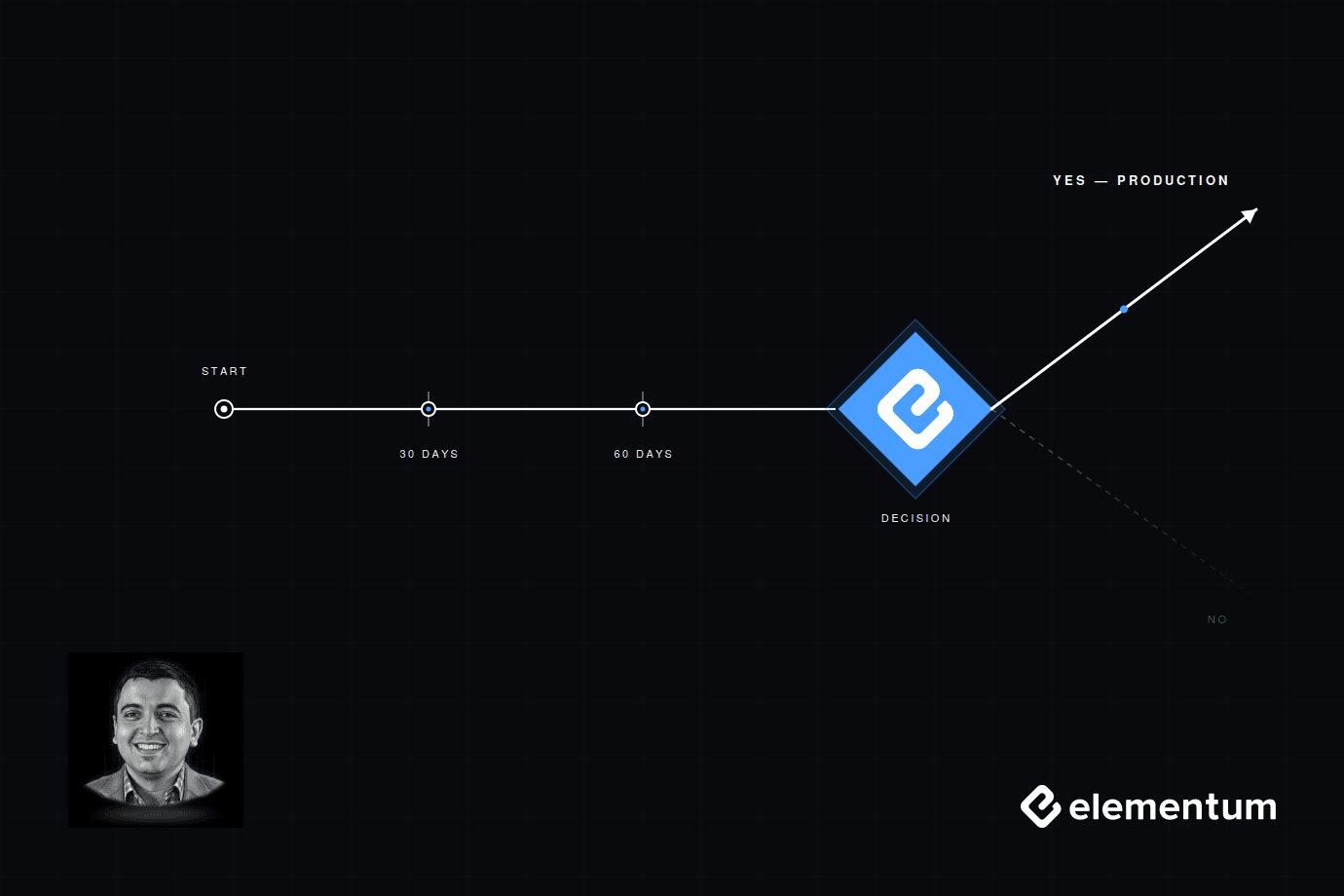
Before we start, we line up on three things. What does success look like at 30 days. What does it look like at 60. What would make the expansion decision obvious.
If you can't answer those before the pilot starts, you're not ready to run one.
End With a Decision
A good pilot produces four things.
Production. Not a demo. Not a proof of concept. Real users running real workflows.
A real baseline. How many workflows exist. How much volume each one handles. What percentage is automatable, and what needs human judgment. What the current setup actually costs to run.
A path forward. Fast, medium, and slow options for expanding from here. Cost, timeline, risk for each.
A yes or a no. Not "let's extend." Not "let's keep going." Either the evidence is there or it isn't.
That last one is the big one. A pilot that ends in "let's keep going" isn't a pilot. It's a delay. Define the off-ramp before you start, and hold yourself to it.
Nader Mikhail is the CEO and co-founder of Elementum, the open orchestration platform for enterprise AI workflows.