
The Model-Lock Trap
A couple of weeks ago I wrote about the data prison most enterprises don't know they're in.
The question I've been getting since: what else should I be watching for?
Here's the one I keep bringing up.
Most AI vendors you're evaluating right now are going to tell you what they're "built on." Built on GPT-5. Built on Claude. Built on Gemini. It's on the first slide of the pitch deck. It's in the press release. It's on the homepage.
They're selling it as a feature. It's a liability.
Two Traps, Set at the Same Time
Data lock-in is live. I covered that one. The window to move your operational data into infrastructure you control is still closing.
Model lock-in is the second trap, and it's being set right now, in the same vendor conversations. Most buyers aren't spotting it because it doesn't look like lock-in. It looks like a feature.
When a vendor is "built on" a specific LLM, that model is load-bearing. Their prompts are tuned to it. Their fine-tunes depend on it. Their cost structure assumes its pricing. Their product roadmap is coupled to its release cycle.
That's not a partnership. That's a dependency. And they're passing it through to you.
Why This Costs You
Three things happen to every frontier model, on a predictable cycle:
Costs change in ways you can't predict. Rate cards trend down, but the bill doesn't always follow. A new tokenizer ships and the same prompt costs 20% more. A long-context surcharge appears above a threshold your workflow just crossed. The cheaper model you were routing to gets deprecated and the replacement is priced differently. Over six months, three of these will happen to you.
Capability shifts. The best model for extraction isn't the best for reasoning. The best for reasoning isn't the best for code. A workflow that routes everything to one model is paying premium prices for commodity work.
Availability shifts. Rate limits tighten. Regional restrictions appear. Models get deprecated on timelines you don't control.
If your vendor's architecture assumes one model, every one of these shifts hits you. Not them — you. Your costs. Your capability gaps. Your workflows going dark when the model they depend on has a bad afternoon.
The Architecture Question
There's a clean test, and it takes one sentence to administer.
Ask your vendor: "Can I run step three of this workflow on a cheaper model than step four?"
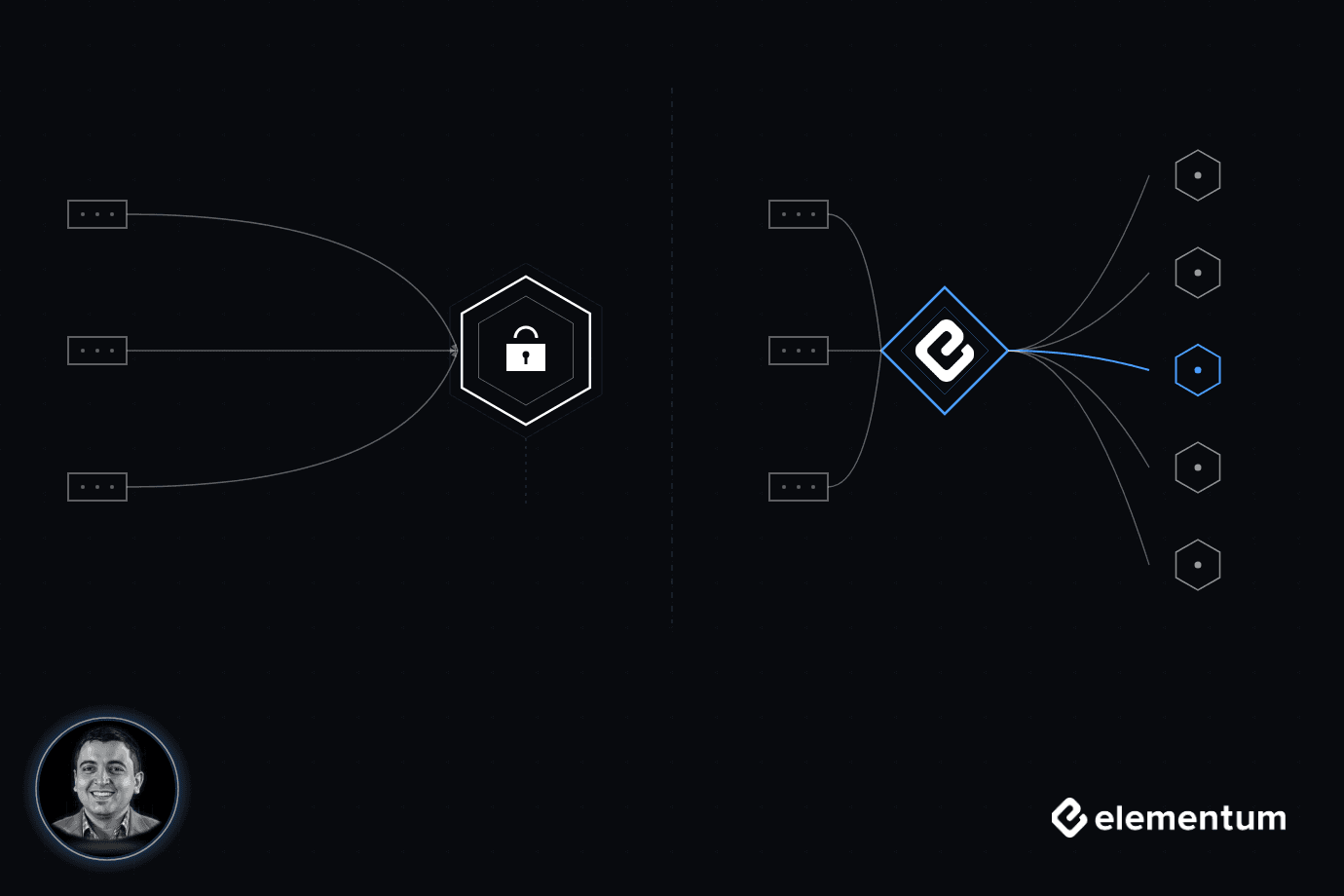
If the answer is yes, and it's a config change, the architecture is sound. The model is a commodity they consume.
If the answer is "talk to our product team" or "that's on the roadmap" or "you'd have to migrate to a different SKU" — the model is load-bearing. The architecture is rented from whoever built it.
This isn't theoretical. On any real enterprise workflow, different steps have wildly different requirements. A classification step needs a fast, cheap model. A reasoning step needs a frontier model. A drafting step might run best on your own Snowflake Cortex deployment, inside your security perimeter, not leaving your data cloud at all.
Routing decisions like these shouldn't be vendor negotiations. They should be configuration.
What This Looks Like at Elementum
We don't have a model partnership to announce, because we don't have one.
We're inference-provider agnostic by design. Anthropic, OpenAI, Google, Snowflake Cortex, Databricks Foundation Models, your own fine-tunes — same workflow, different providers, routed per step.
When a new frontier model ships, our customers get it that week. Not when our product team finishes the integration. Not when our contract with the provider gets renegotiated. That week.
When the model economics shift — and they will — our customers shift with them. We don't have a margin to protect on any one provider, so we don't need to defend one.
The CIO Question
The question every CIO should ask during vendor evaluation:
"If my costs on this platform go up 30% next year — whether from a tokenizer change, a surcharge, or a deprecation — do I have any options, or am I just absorbing it?"
If the vendor hesitates, you have your answer.
Two traps are being set right now. Data lock-in is the one most enterprises are starting to see. Model lock-in is the one they're walking into while they're busy solving the first one.
The best AI architecture is the one where the model is a commodity you consume. Not a partner you depend on. Not a relationship you're locked into.
The vendors telling you what they're built on are telling you exactly where the trap door is.
Nader Mikhail is the CEO and co-founder of Elementum, the open orchestration platform.