
How Elementum Builds the Next Generation of AI-Driven Workflows with Unistore's Hybrid Tables
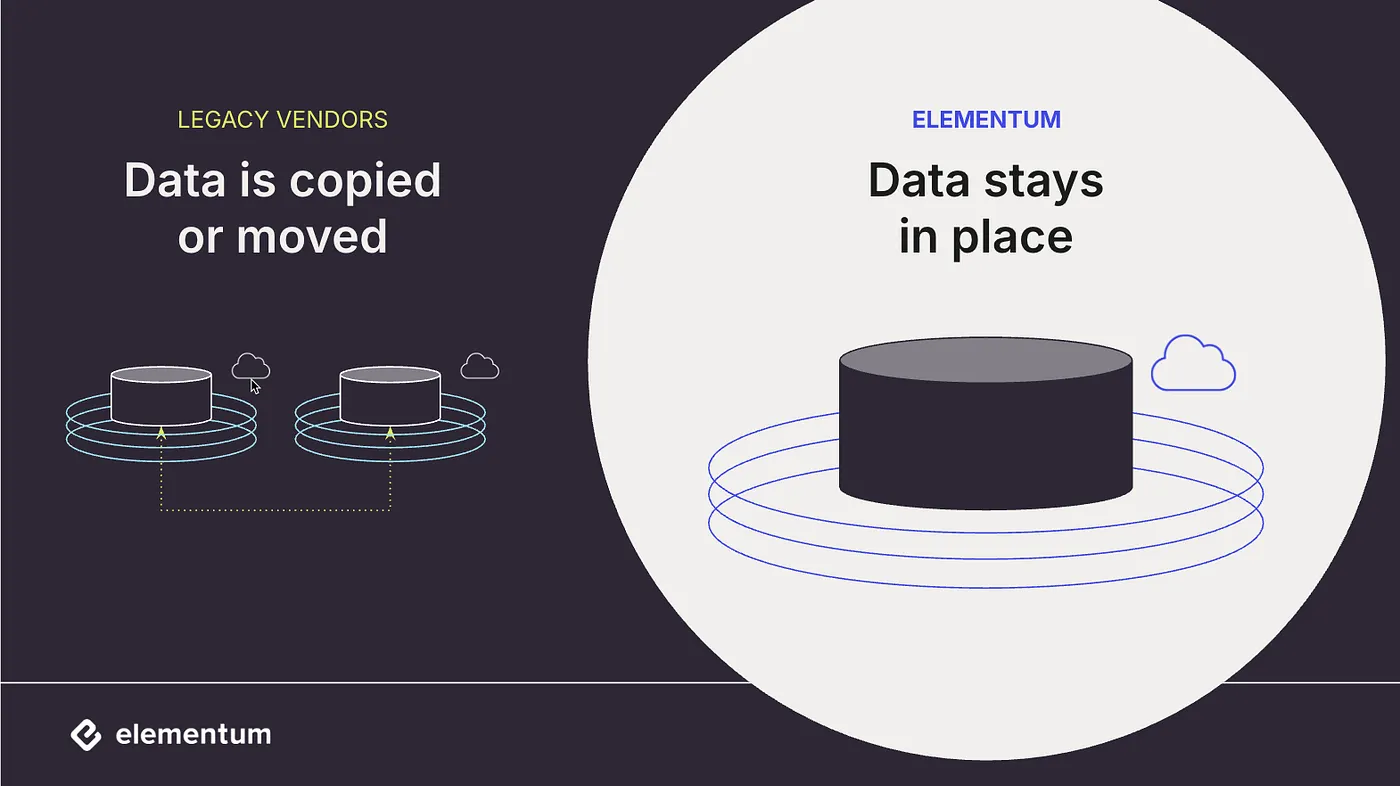
Every enterprise sits on mountains of data, but turning that data into automated business processes remains frustratingly complex. Most workflow platforms require moving data around, creating silos and security risks.
Elementum takes a radically different approach. Our AI-driven platform runs directly on Snowflake, using Unistore's Hybrid Tables to deliver both operational speed and analytical power. This enables our customers to automate critical business processes, from contract management to customer support, while keeping all their data centralized and secure.
The Challenge: The Dual Demands of AI-Driven Automation
Elementum's core value proposition is to transform data into automated workflows, but this objective presents a unique technical challenge. Traditional workflow automation platforms are not built to work directly on modern data clouds. In fact, they require data to be moved or copied, which creates complexity, increases latency, and introduces serious security and governance concerns.
Our approach requires a single platform that can handle two fundamentally different types of workloads:
- Operational Workflows: Our platform orchestrates AI agents, rules, and human interactions in multi-step, dynamic processes. This involves real-time, high-concurrency reads and writes to track the state of every task, such as a user requesting customer support. These workflows demand a platform that can handle a high volume of transactions with low latency. Plus, this relational data requires enforced PRIMARY KEY and FOREIGN KEY constraints to ensure data integrity.
- AI-Driven Analytics: To inform these workflows, our platform needs to run large-scale analytical queries to power AI models. This requires a platform optimized for massive parallel processing and data aggregation.
The challenge is that these two workload types (online transactional processing (OLTP) for transactions and online analytical processing (OLAP) for analytics) have historically required separate, specialized databases. We need a single platform that can run both workloads efficiently to provide fast value for our customers and to keep data in one, secure place.
The Snowflake Solution: Unistore's Hybrid Tables
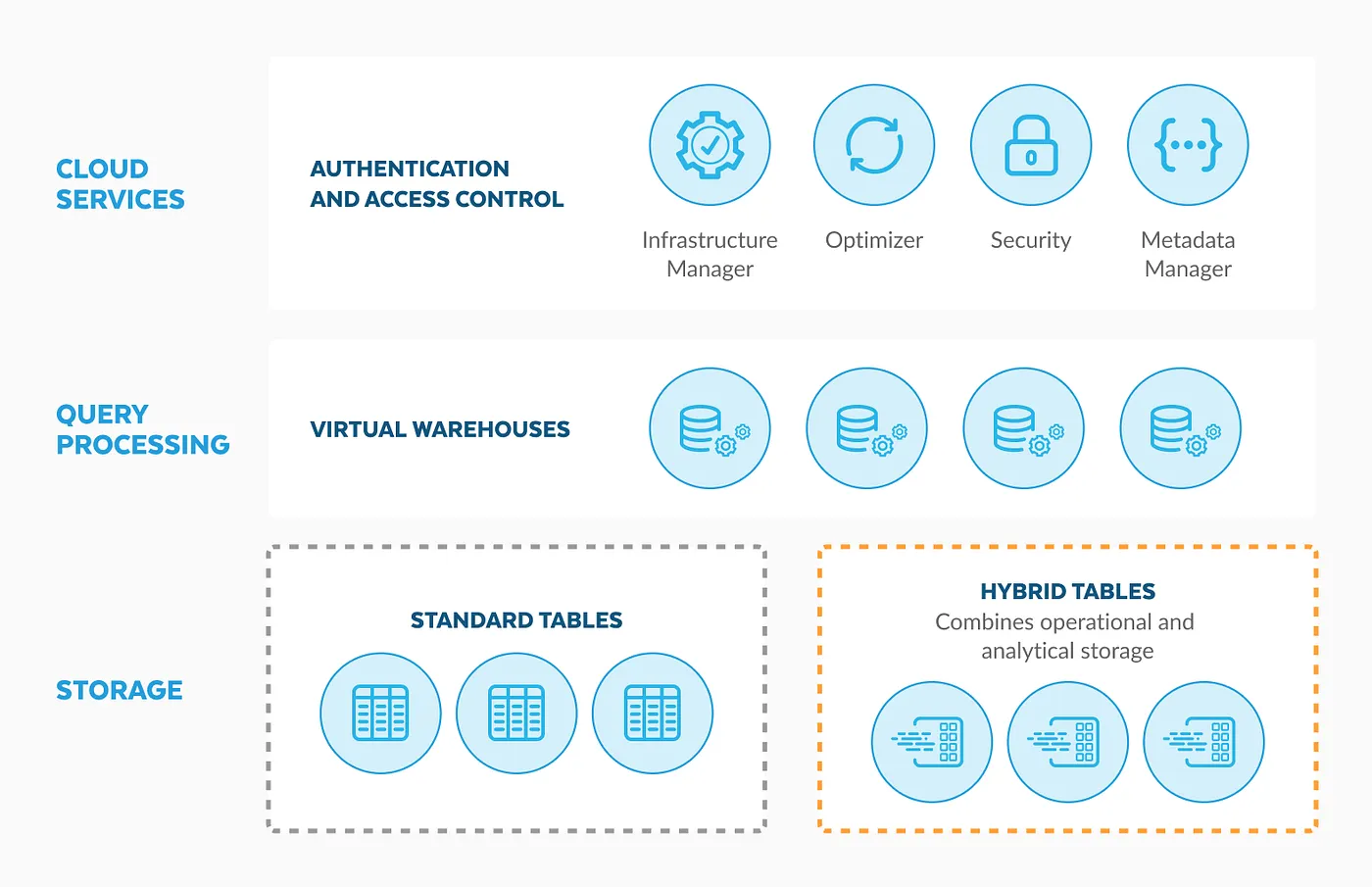
We chose to build on Snowflake because it provides a unified platform to address both transactional and analytical needs. Hybrid Tables are essential to our architecture because they are optimized for workflows that require high concurrency and fast single-row operations.
Our operational workflows, like managing customer support cases, require fast database performance. Hybrid Tables deliver this by providing low-latency reads and writes, even when multiple users are accessing records simultaneously.
Plus, Hybrid Tables seamlessly coexist with standard Snowflake tables, allowing us to run hybrid workloads that mix operational and analytical queries on a single, unified dataset without complex data movement or federation.
This combination is the underlying implementation detail that enables us to build high-ROI applications directly on Snowflake that meet our customers' needs.
Real-World Applications for Hybrid Tables
Using Hybrid Tables, we help our customers tackle complex workflows across many practical applications:
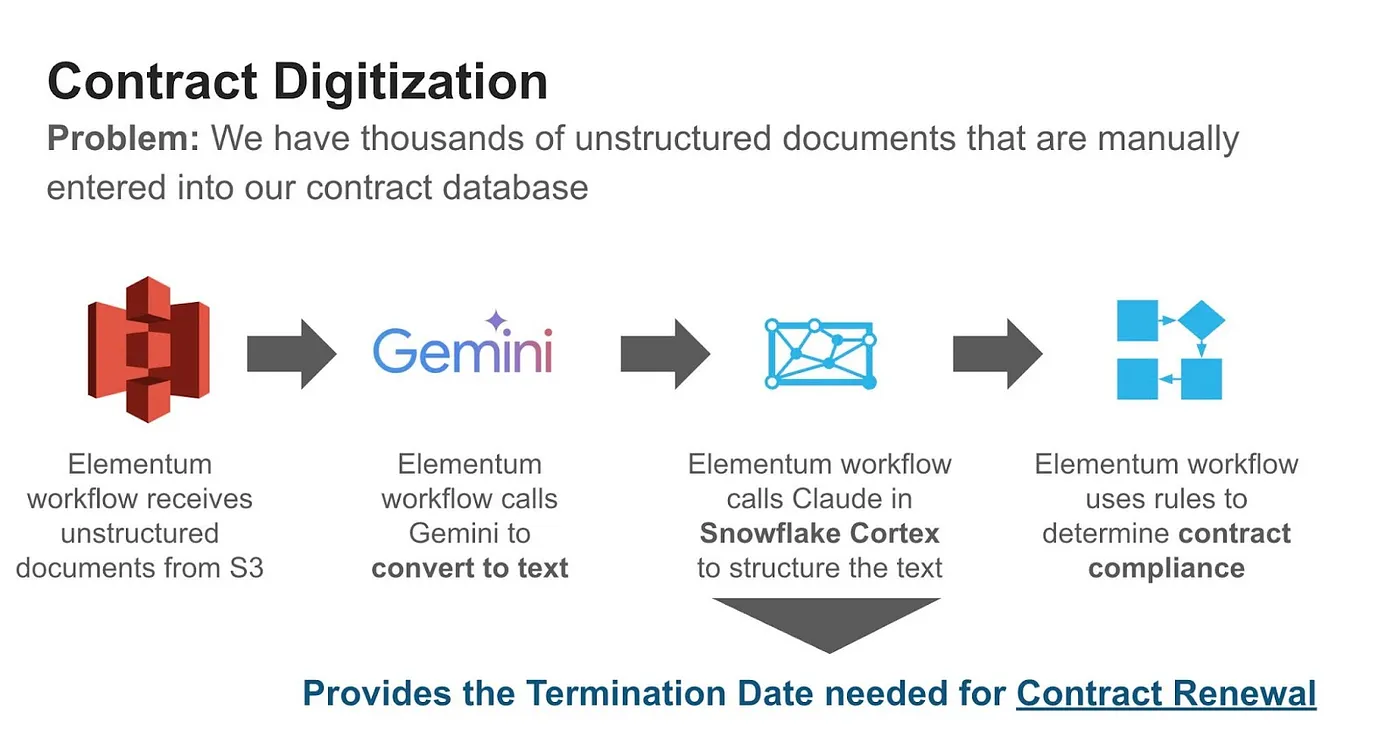
- Contract Digitization: Our customers are achieving 2x faster contract resolution times by digitizing thousands of unstructured documents that would otherwise be manually entered into a database. Our workflow ingests these documents, uses Google Gemini to convert them to text, and then calls Claude in Snowflake Cortex to structure the text. The final step uses rules to determine contract compliance, which involves reading and writing to Hybrid Tables to manage transactional workflow records.
- Software License Management: We're helping customers save more than $10M annually by using Snowflake's machine learning model, SnowPatrol, to identify unused software licenses. The process of identifying shadow spend and getting internal approvals is a transactional workflow that involves a high volume of reads and writes, making Hybrid Tables an ideal fit.
- Tier 1 Support: To address rising support costs, we developed a workflow with AI agents that's helped our customers cut resolution times to 15 minutes on average and boost customer satisfaction scores by 125%. When a user asks for help, the AI agent writes to a workflow record and reads from a knowledge base containing information needed to solve that user's issue. All reads and writes run on Hybrid Tables, which offer the high-performance operations needed for live support.
- Provider Onboarding: We're helping a healthcare customer achieve 2x faster onboarding times for new providers through a process involving high-volume transactions and updates. We're looking forward to moving this use case to production on Hybrid Tables to address their high scalability and concurrency needs.
Business Impact and Results
Hybrid Tables enable Elementum to solve complex operational challenges that were previously difficult or impossible to address with traditional data architectures.
Hybrid Tables give us what we need to help our customers:
- Unlock High-ROI Applications: Hybrid Tables enable us to build true transactional applications on Snowflake, allowing our customers to extract maximum value from their data without architectural complexity.
- Eliminate Data Silos: Our customers can run operational workflows directly on their Snowflake data. No need to move information between systems or manage separate transactional databases.
- Drive Measurable Efficiency Gains: Our platform helps customers complete more business processes automatically with fewer errors, which translates directly to cost savings and faster turnaround times.
- Power AI-Driven Workflows: Hybrid Tables serve as the high-performance foundation for intelligent workflows that seamlessly combine AI agents, business rules, LLMs, and human oversight.
What's Next for AI-Driven Workflows
Our success with Hybrid Tables has shown us what's possible when operational workflows run directly on enterprise data. As AI continues to advance, we believe the organizations that thrive will be those that can seamlessly blend transactional operations with large-scale data analytics, without the complexity of managing separate systems.
Hybrid Tables have been essential to making this vision a reality for our customers today, and there's much more to come. We're already exploring new use cases that would have been impossible with traditional architectures, and we expect to see entirely new categories of intelligent applications emerge.
For us, this represents more than just a technical solution. It's a glimpse into the future of how enterprises will operate. With Hybrid Tables, we're helping customers transform their data platforms into the intelligent backbone of their entire business.